
I check the received model
There is a whole lot of reference, the model I received is well stamped 19DZT

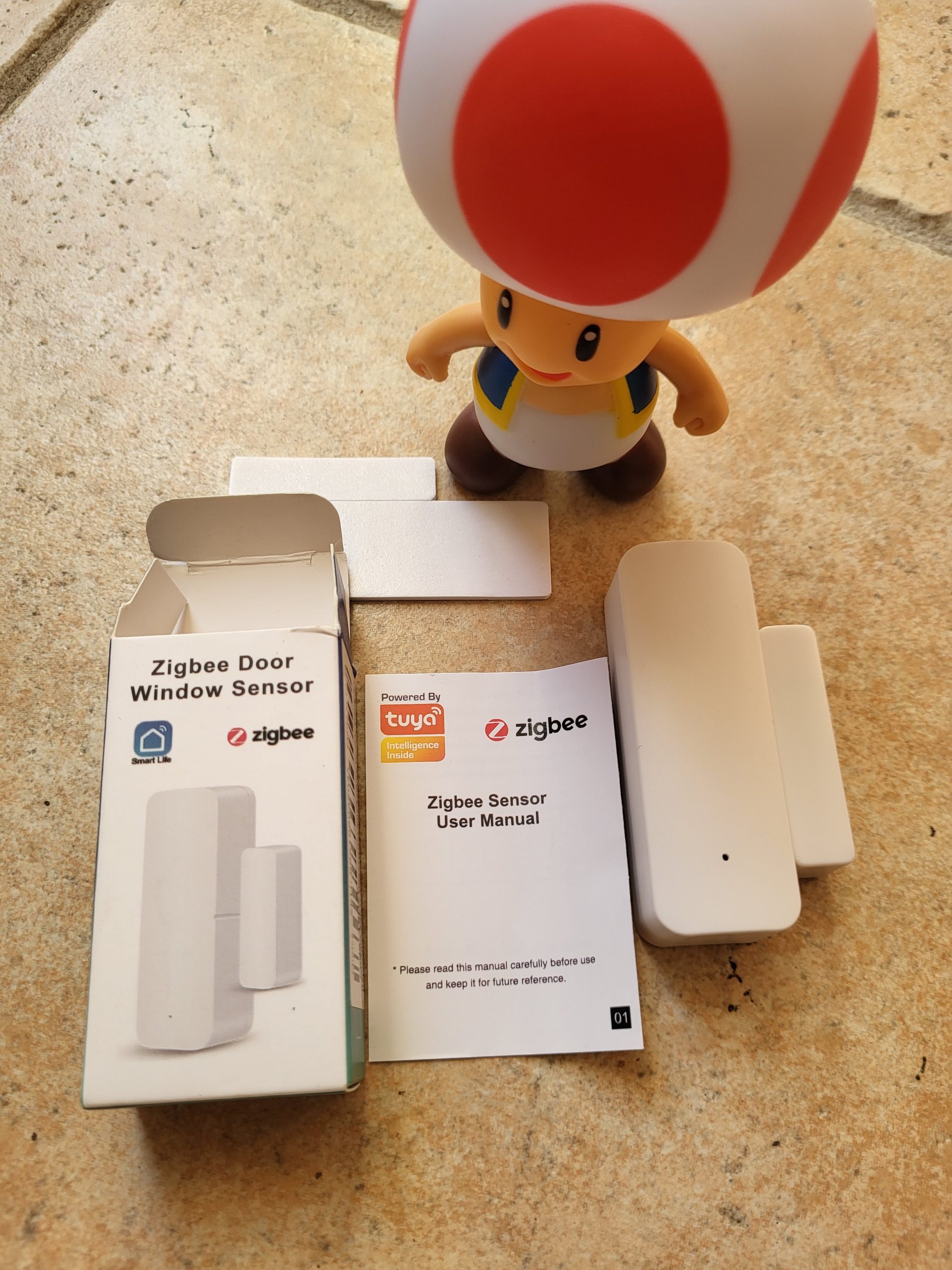
There is a whole lot of reference, the model I received is well stamped 19DZT
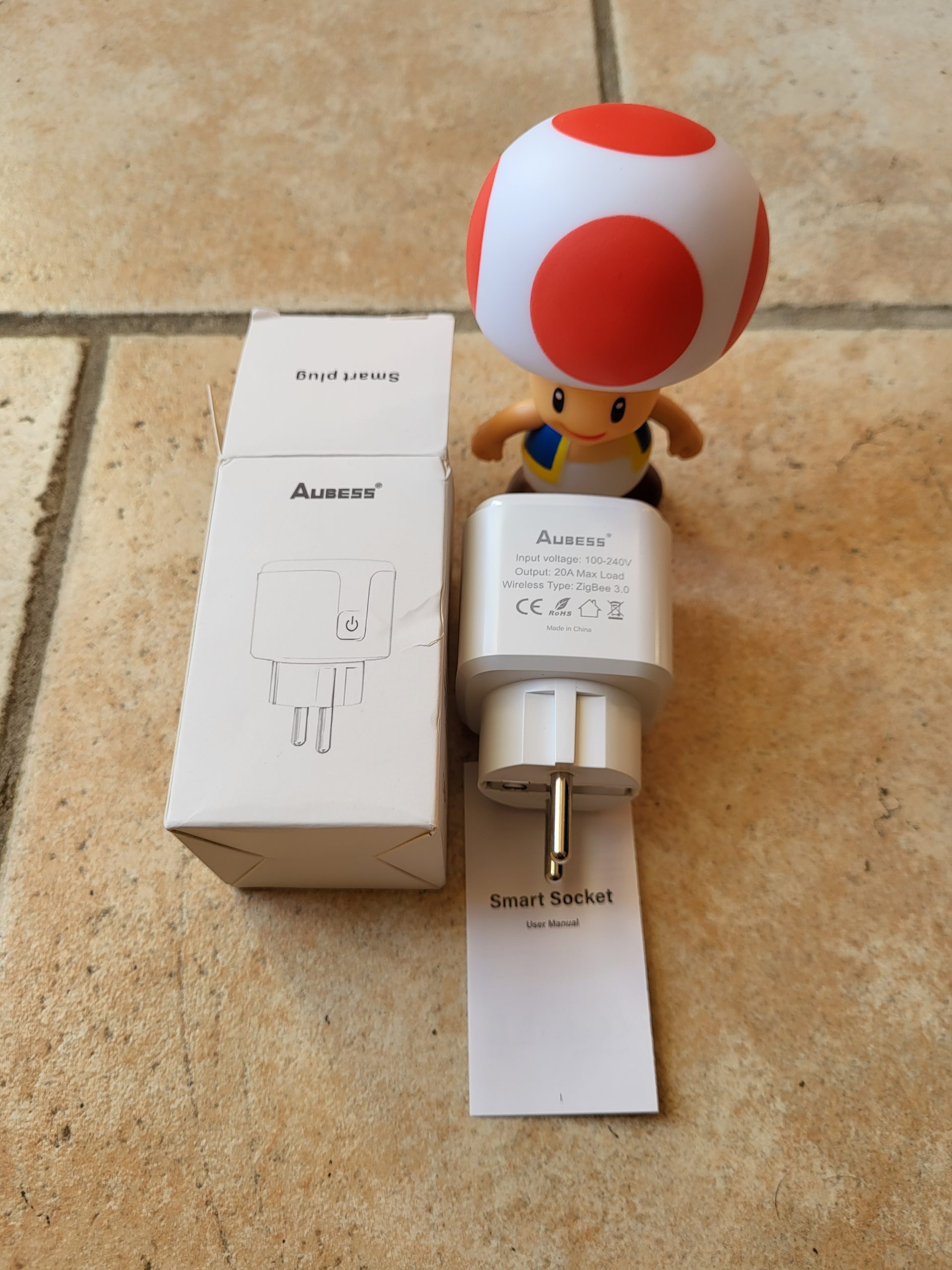
There is a whole lot of reference, the model I received is well stamped Aubess, 20A Read More
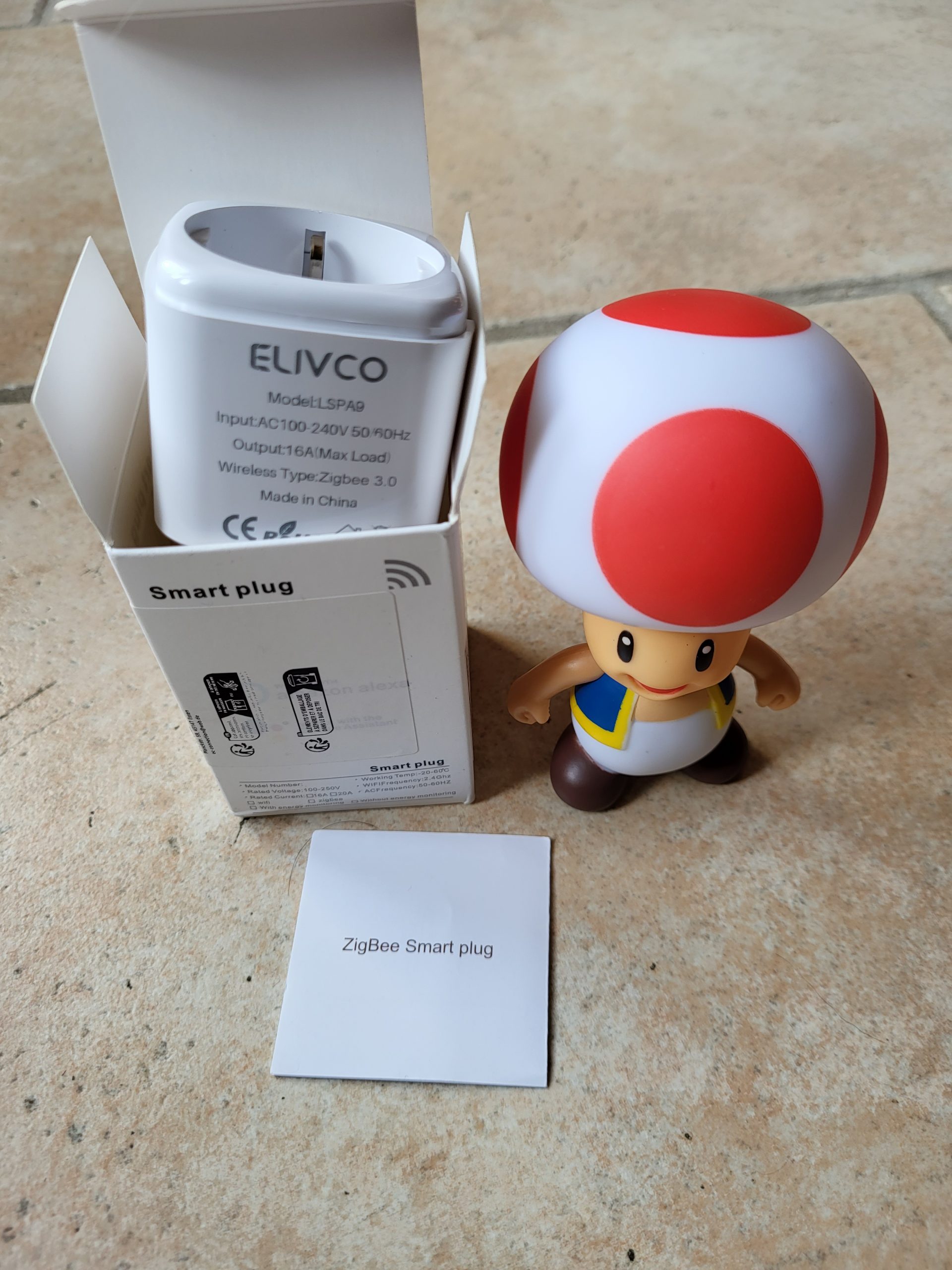
There is a whole lot of reference, the model I received is well stamped LSPA9, mark ELIVCO
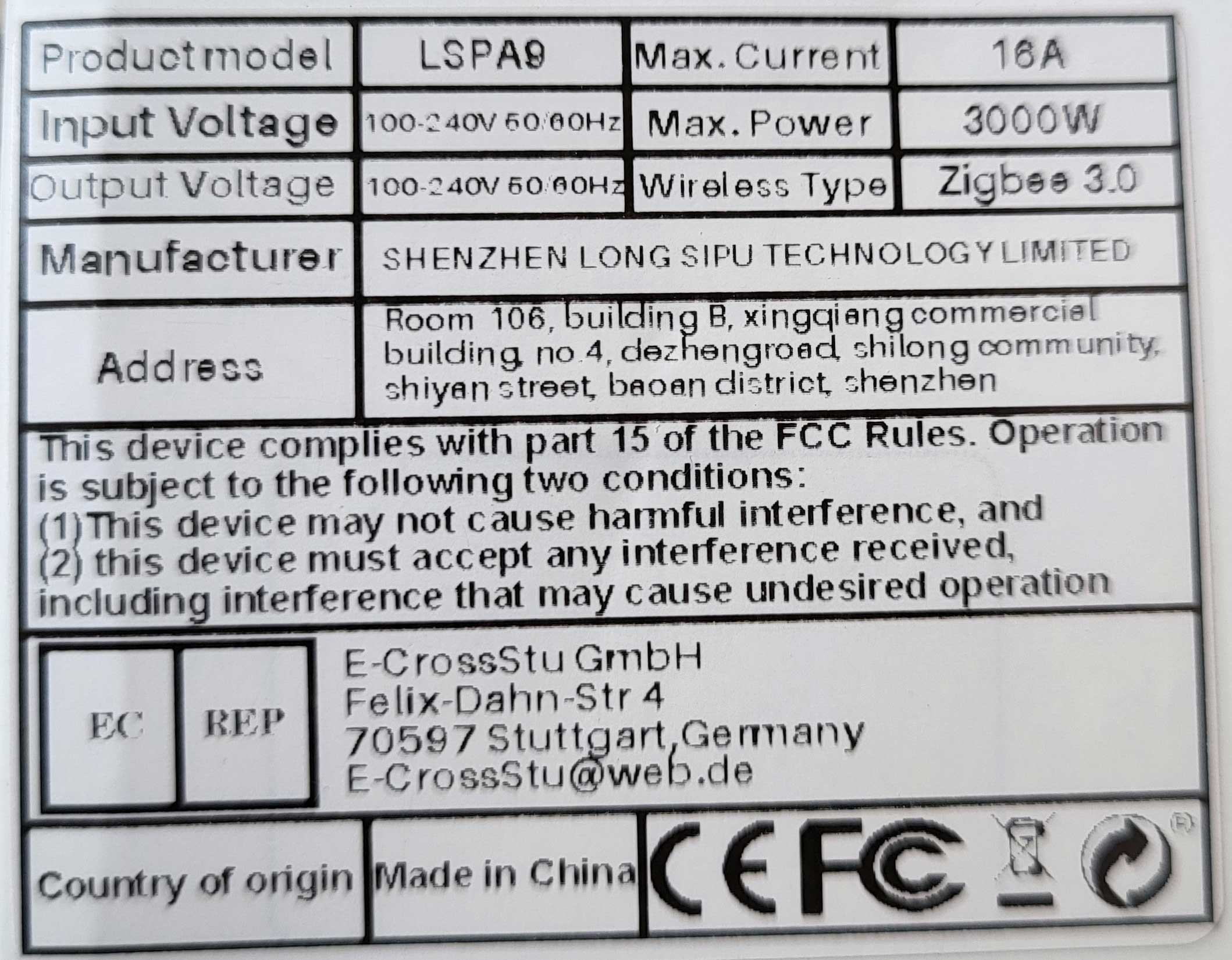
On the date of writing of this Retex:
I switch Zigbee2MQTT to pairing mode. I plug in the plug
The pairing starts…
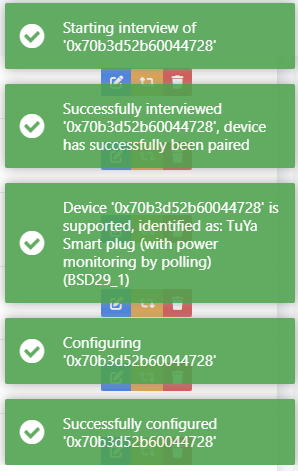
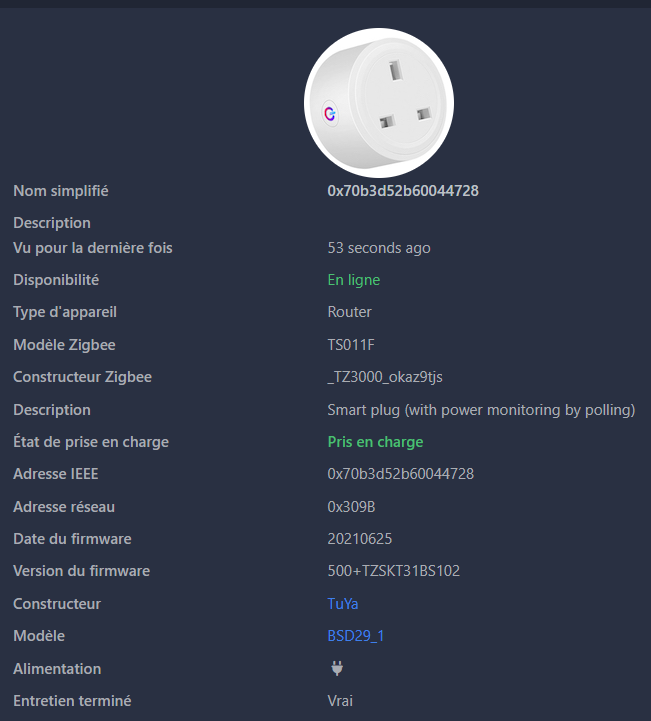
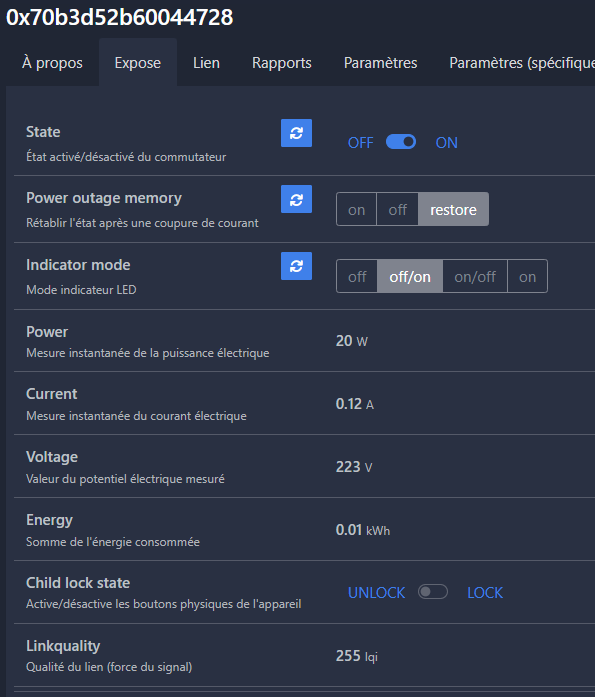
I put a device on the socket, the power goes up well.
I can find my equipment there
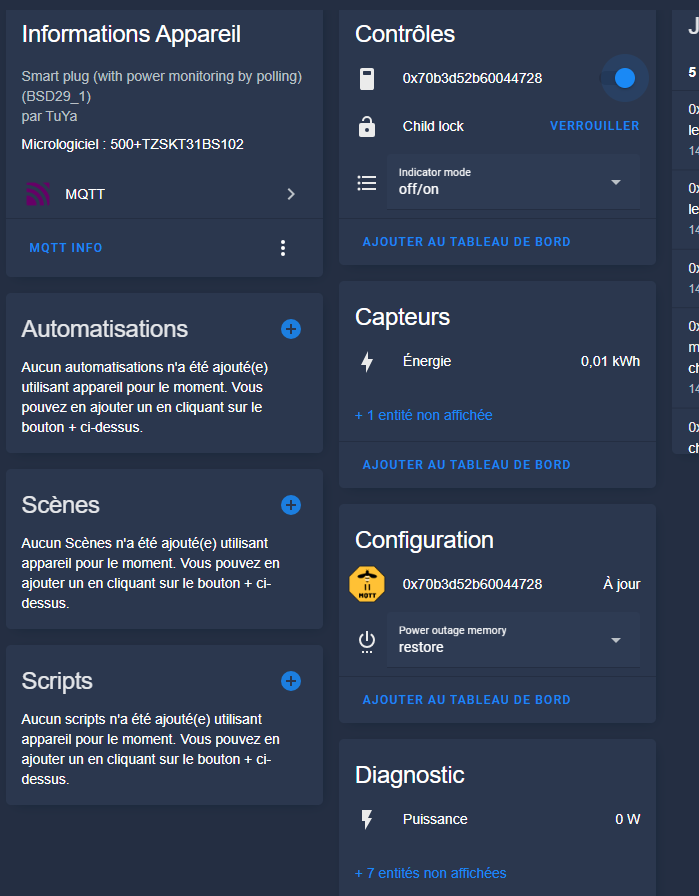
It is perfectly integrated!
This is great news, since the version 2023.6, the network storage becomes archi-simple, it is managed by the core of Home Assistant. Congratulations to the developers, it was missing.
In my previous Retex, I described how to configure the backup via Samba, in this one I will configure the backup via NFS.
I have had some disconnections from Samba that I do not explain yet and on a local network, if NFS is well configured, it is a simple tool that does not require creating a user, so I will only keep a user protected by double authentication on my NAS.
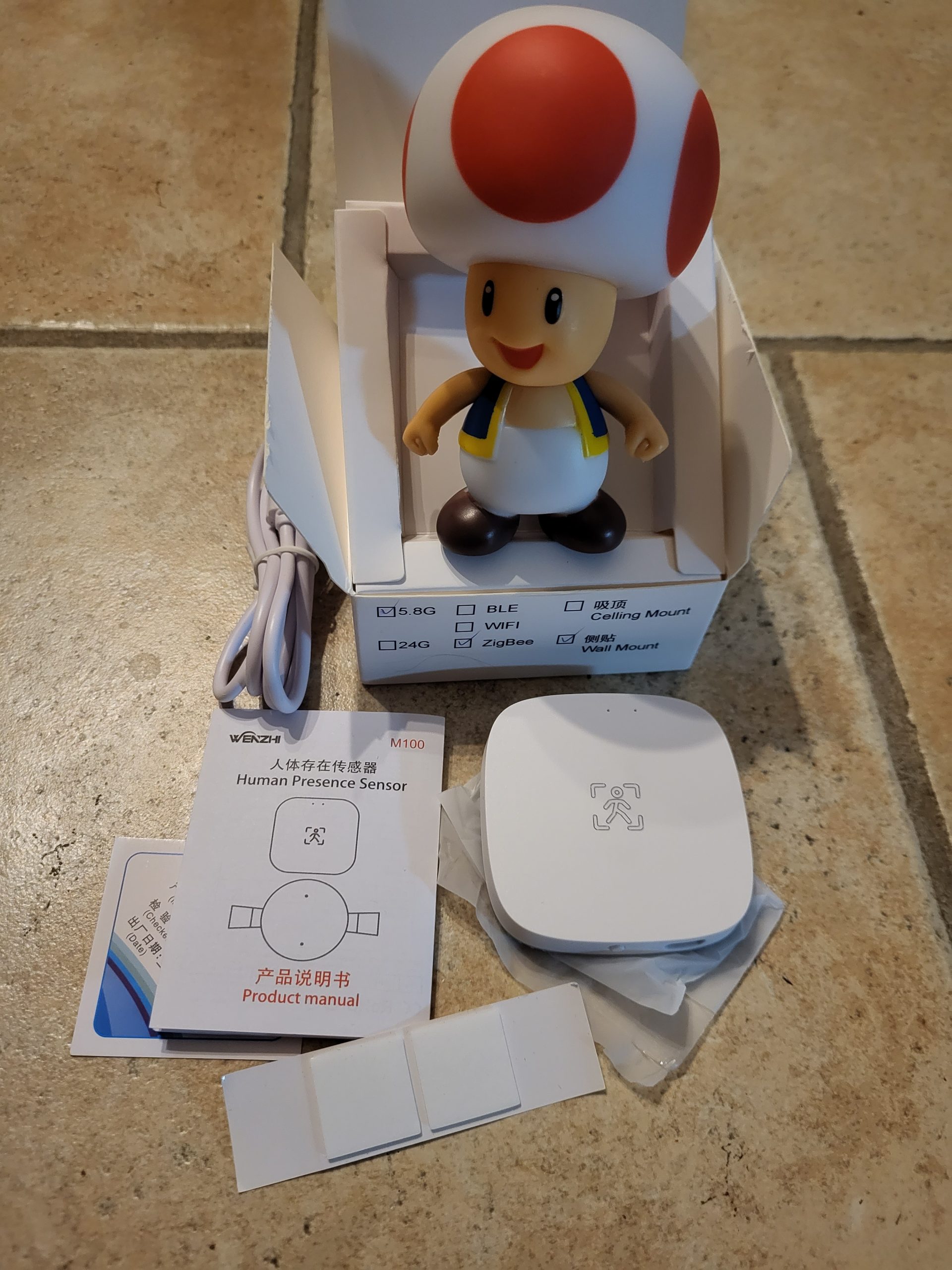
The Zigbee presence detector market offers a multitude of models at very variable prices. I am always wary of unusually cheap equipment: Some sellers display approximate descriptions or deliver different models of the photo. To make no mistake, I always carefully compare the reference (here WZ-M100-W) and visuals with those of the official Zigbee2MQTT documentation.
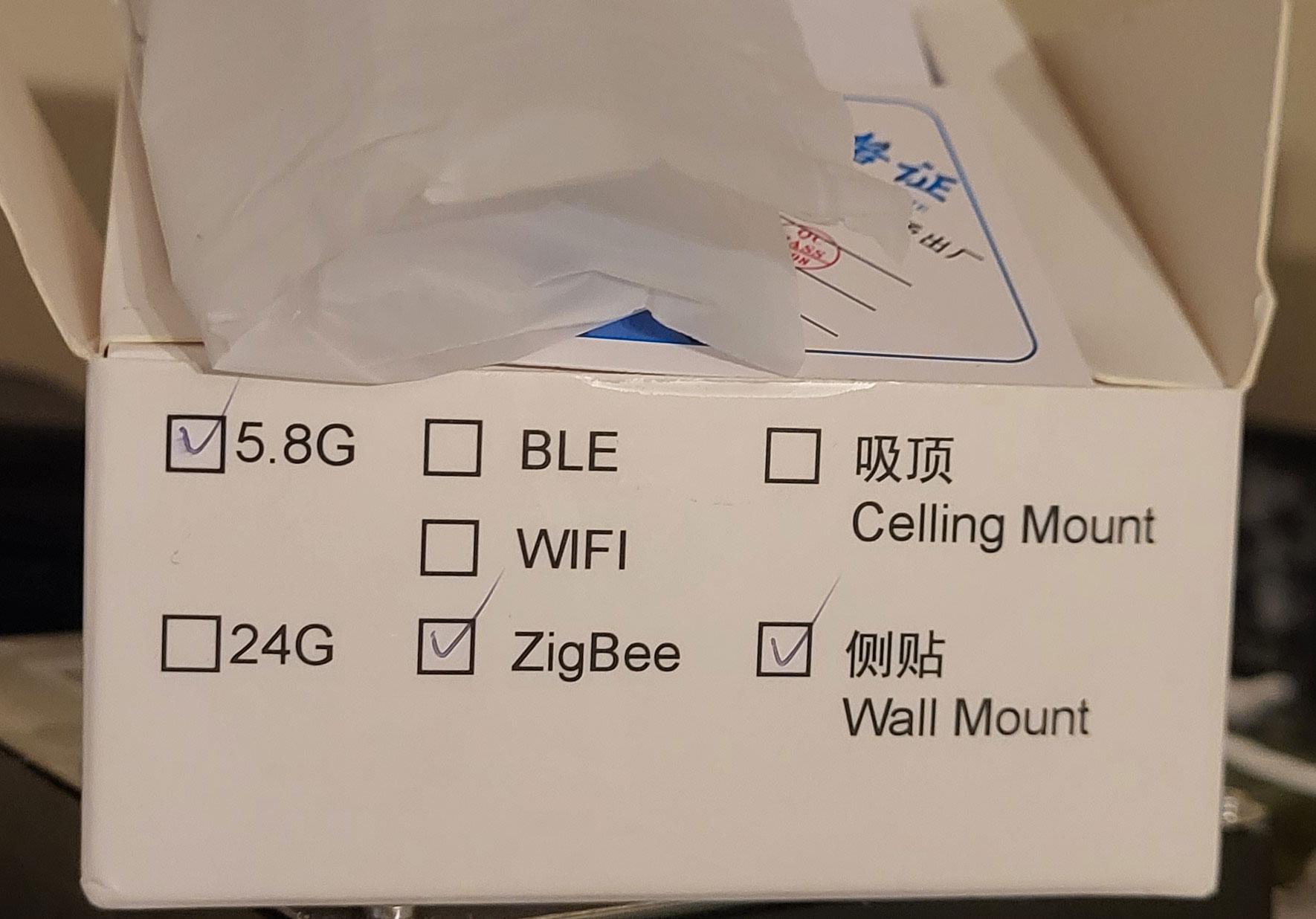
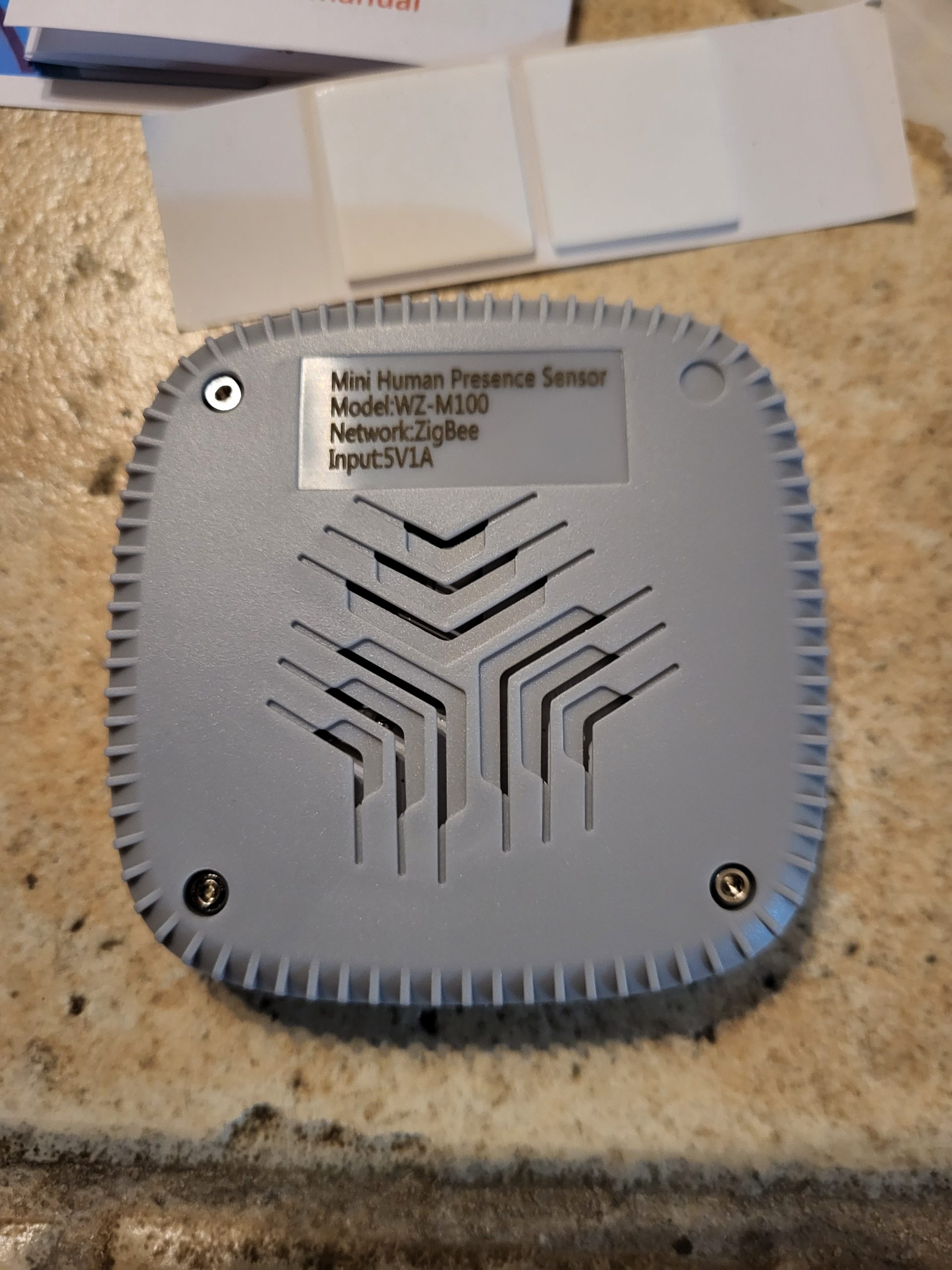
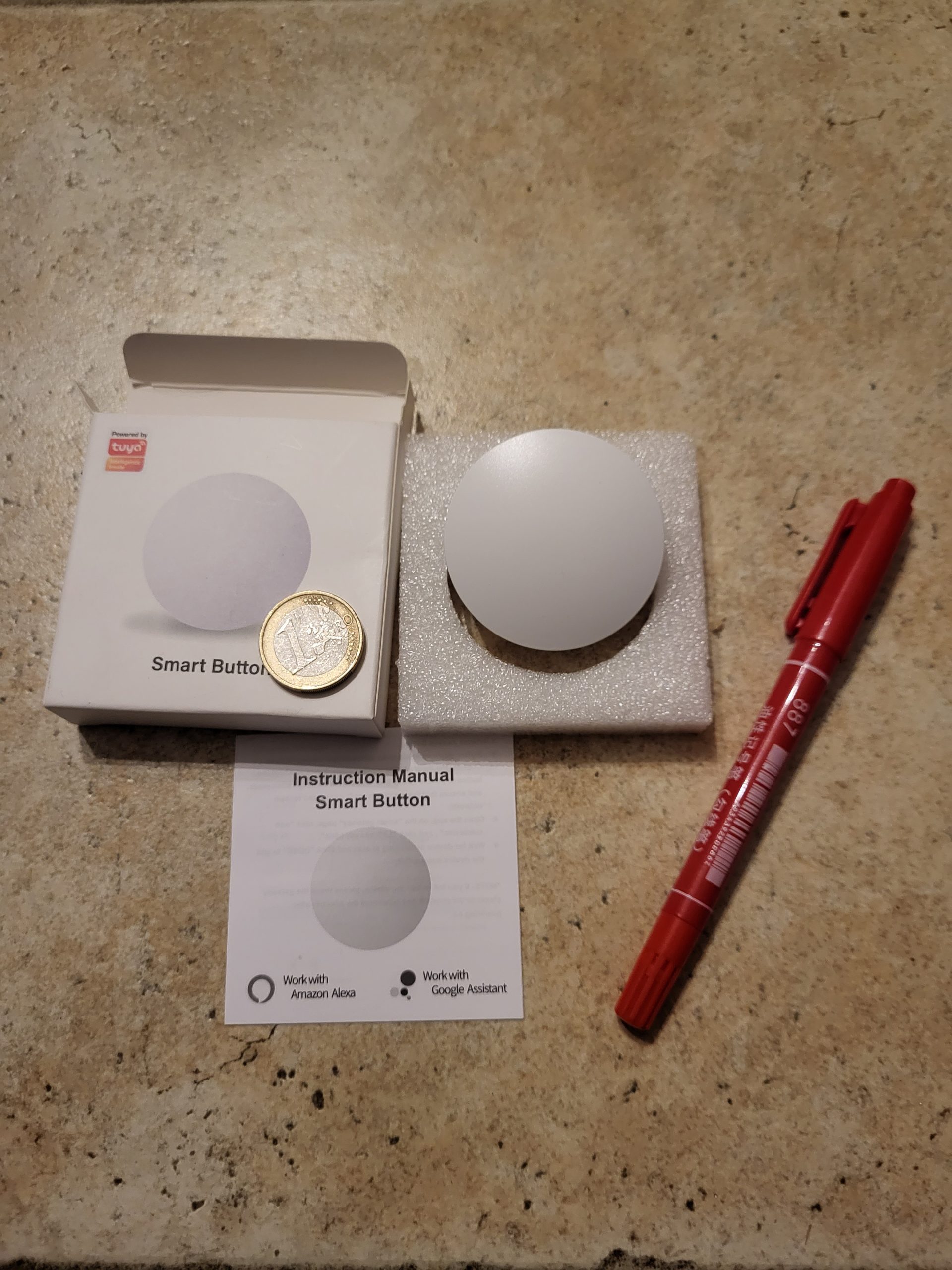
The Zigbee button market is experiencing a significant price increase for popular models like Sonoff or Aqara. I tested this cheap Zigbee 22WZ button, purchased with my own funds without sponsorship, to check its native integration into Zigbee2MQTT and avoid the Tuya cloud ecosystem.

The cardboard only mentions "Tuya", but a precise label confirms Zigbee compatibility. This reassures me because my objective is direct integration via Zigbee2MQTT, without going through the Tuya Smart application, which requires a cloud account and exposes me to risks of external dependence.
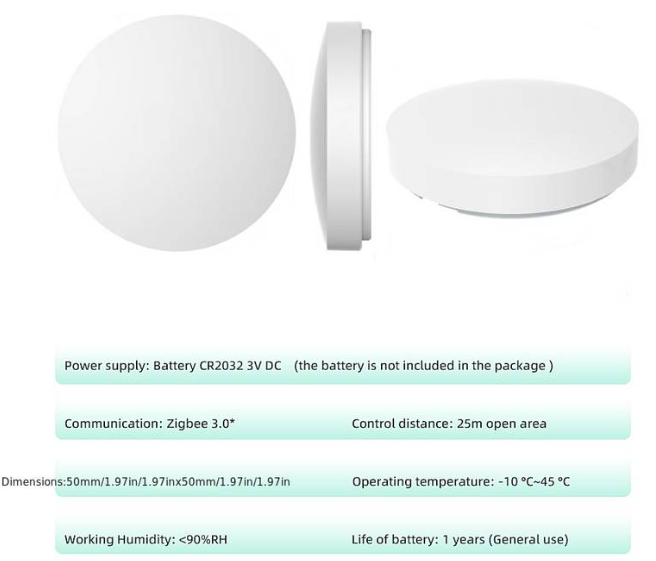
The technical specifications indicate a Zigbee 3.0 certification, a CR2032 battery included, and several possible actions: single support, double support, long support. Zigbee 3.0 ensures better interoperability between brands and an extended mesh network range of up to 100m indoors thanks to the repeaters.
At the time of this feedback:
I switch Zigbee2MQTT to pairing mode via the web interface (Permitter join: ON, 255 seconds). I open the button by rotating the anti-clockwise rear cover by 2-3mm without forcing – an important trick to avoid breakage.
I insert the CR2032 battery by pulling the protective tab. Immediately, the blue LED near the battery flashes quickly, signaling the Zigbee pairing mode. Zigbee2MQTT detects the device in seconds: model TS0601 _TZE200 _zqp2d5dt or similar, exhibited "action" with single, double, long press.
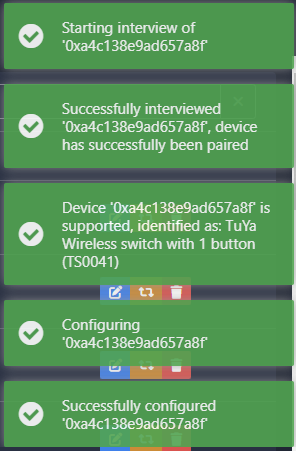
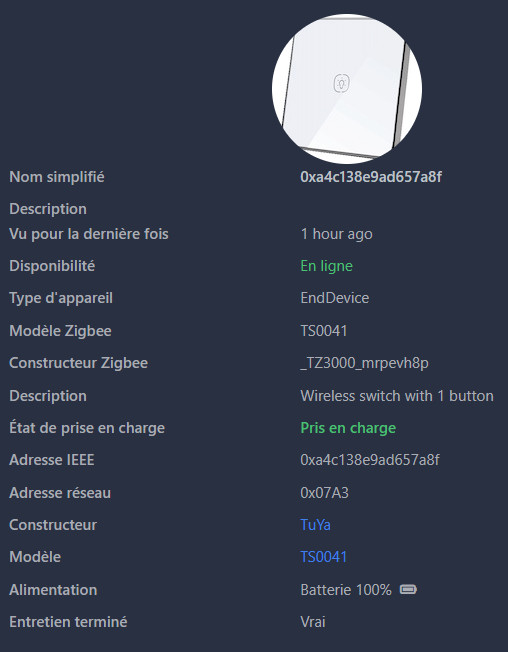
The pairing succeeds perfectly, the button exposes the right entities.
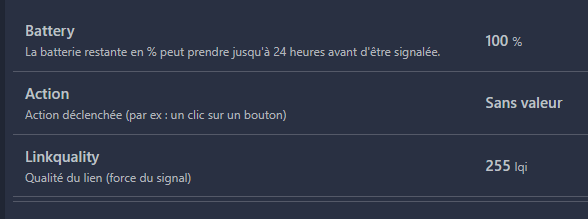
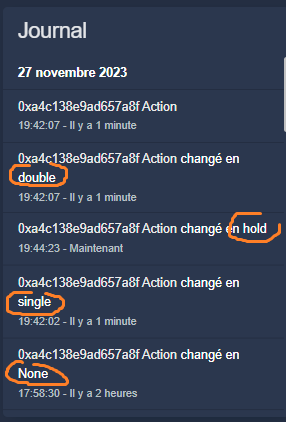
A simple press changes the "Action" field to "single", double to "double", long to "long _press". The battery is displayed at 100% initially; Check it after 1-2 months of actual use.
Via the Zigbee2MQTT > MQTT integration, the button automatically appears as the _zigbee _action sensor.button. Single/double/long _press states are natively recognized for creating automations or scripts.
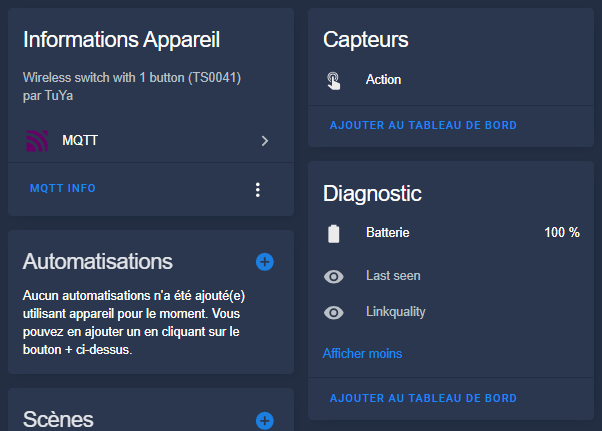
Example of simple automation: trigger "action == single" > lights living room light. For double: active "cinema" scene. Long press: "Good night" scenario. Copy and paste into YAML Automations to test.
This Zigbee 22WZ button offers excellent value for money to extend Tuya cloud-free home automation. It consumes little (estimated battery >2 years), perfectly integrates Zigbee2MQTT/Home Assistant, ideal for advanced automations.
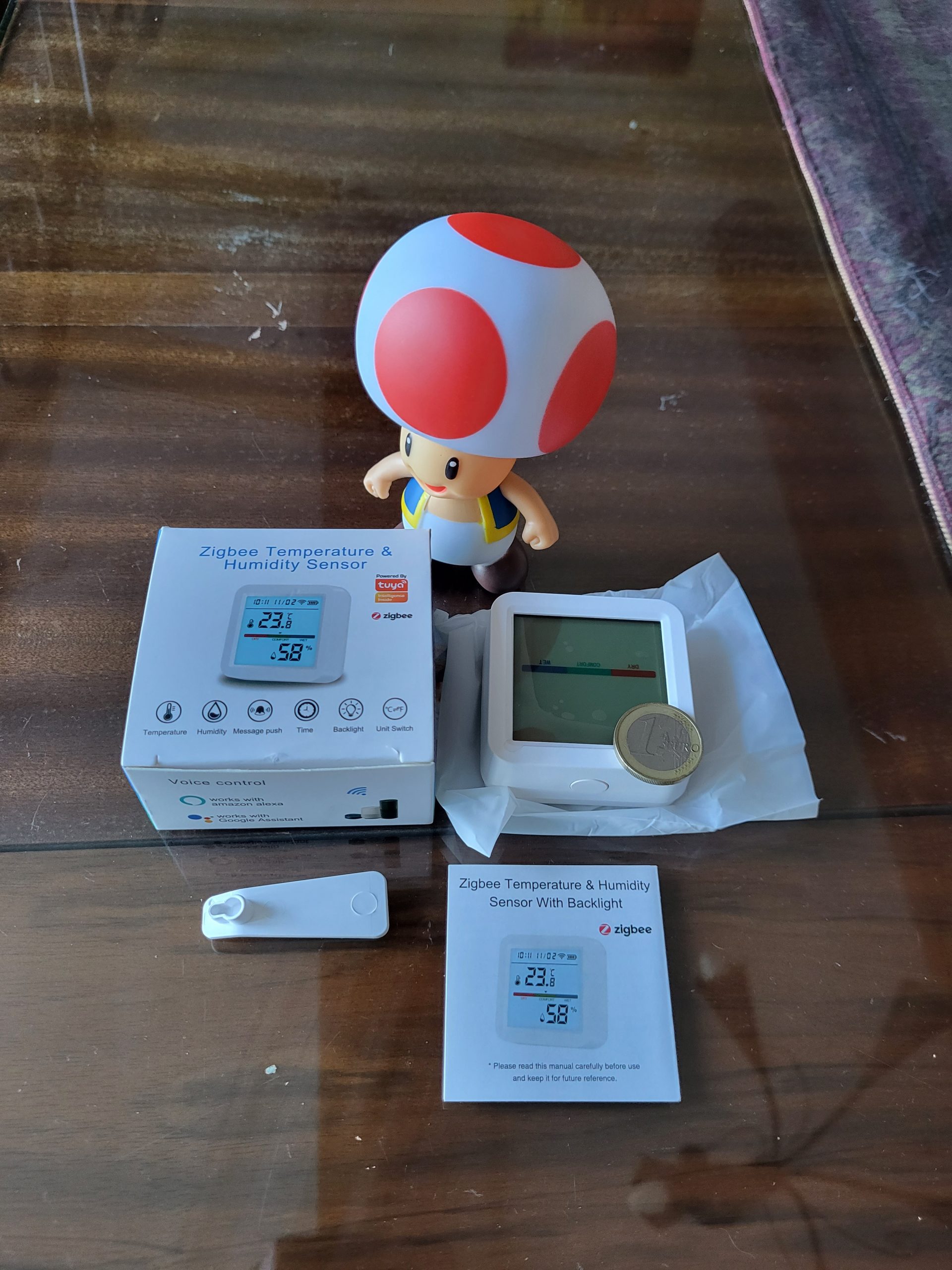
On the date of writing of this Retex:
This thermometer uses 3 AAA batteries not supplied
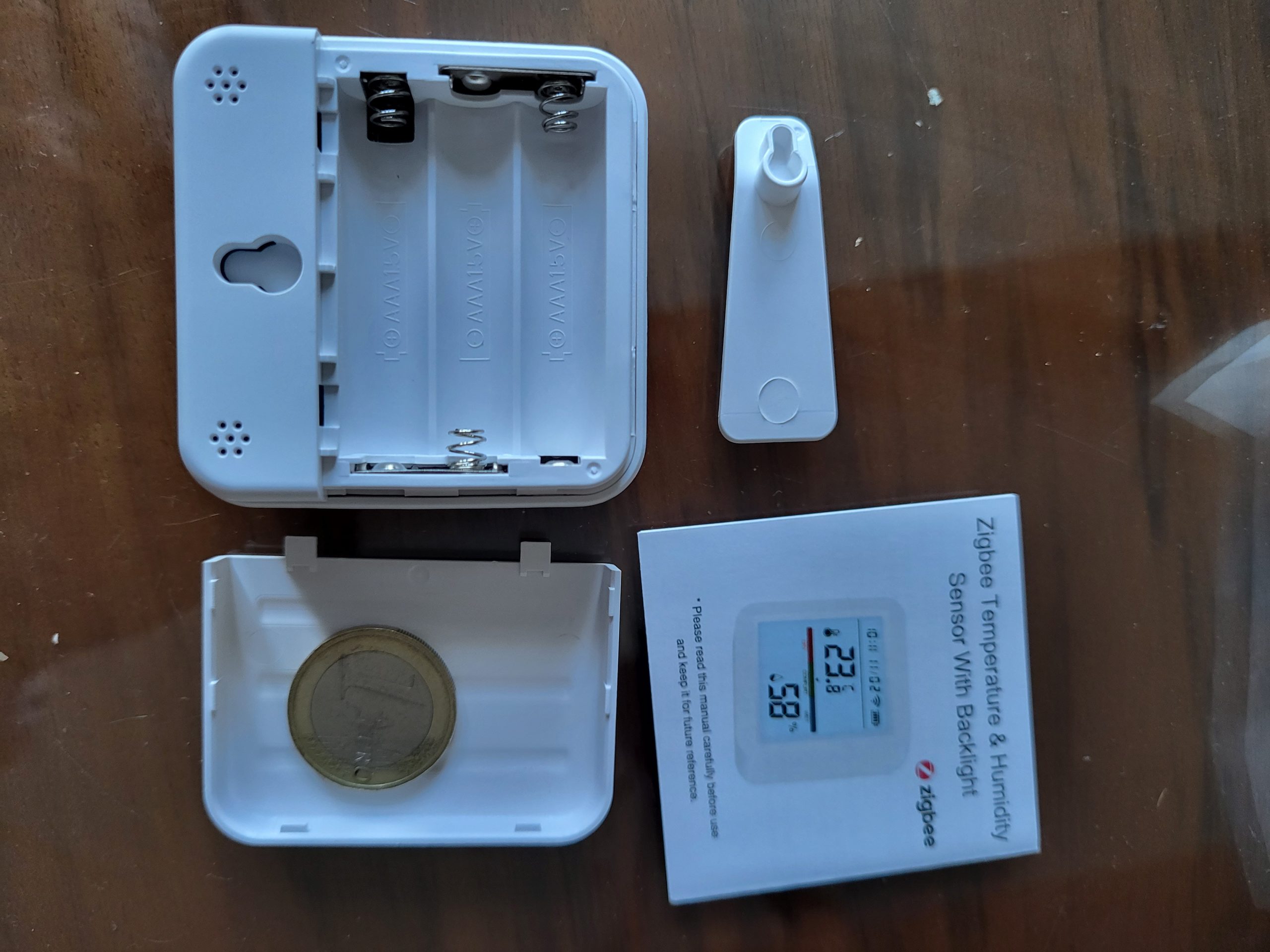
I switch Zigbee2MQTT to pairing mode and plug in the last stack.
When connecting the battery, the temperature is displayed on the thermometer screen, it is just right.
The pairing starts…
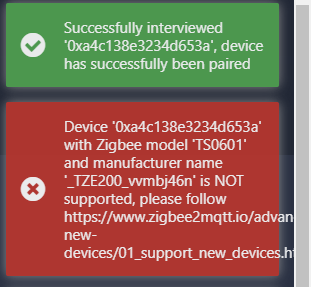
My test stops there, we will have to wait until this thermometer is integrated into Zigbee2MQTT…
It remains a beautiful product, well finished, but if we want to integrate it, we will have to go through Tuya and not Zigbee2MQTT directly, which I refuse to do.
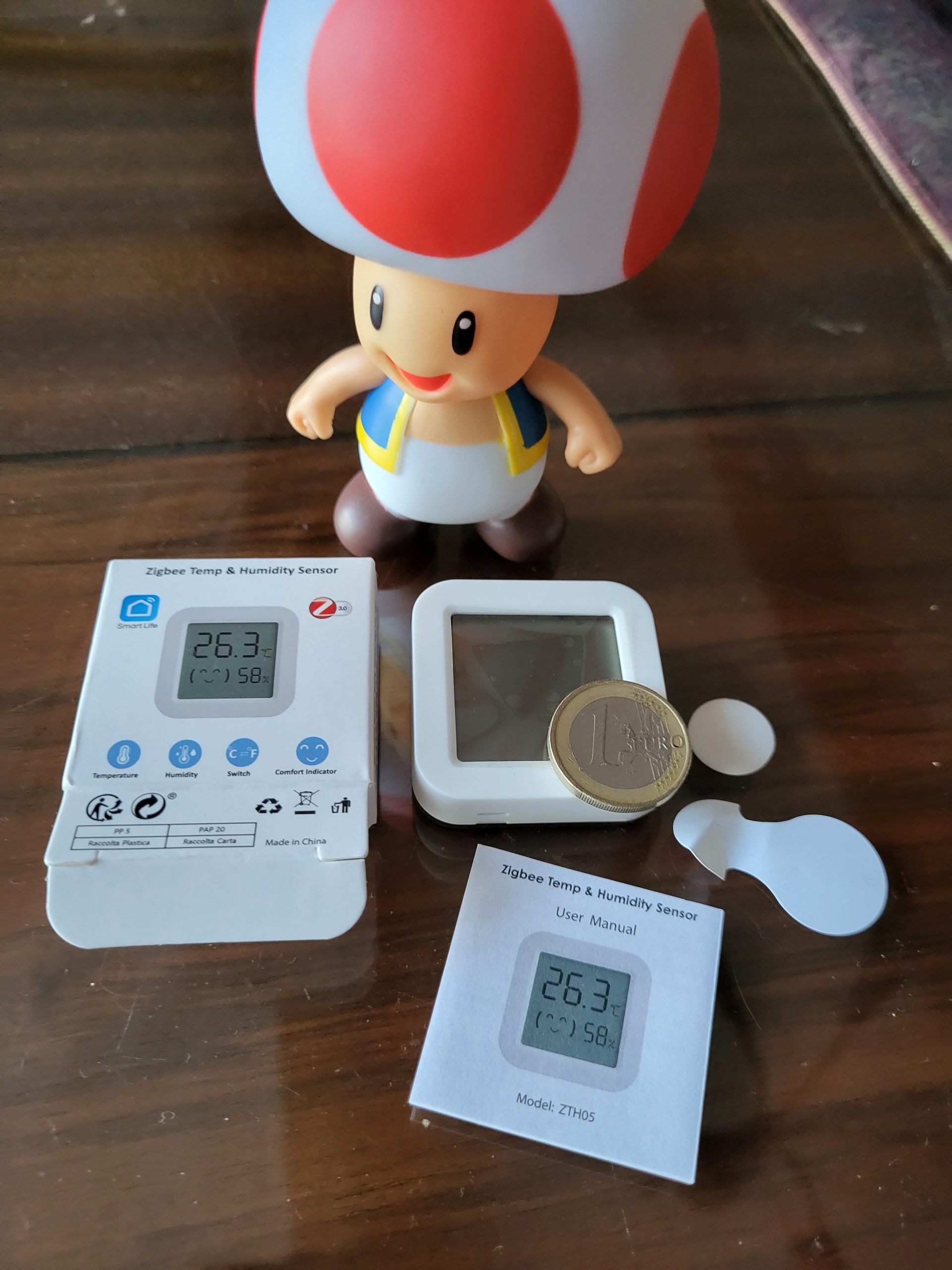
Attention, potential scam, voluntary or not, we sometimes find sites that sell versions very close in terms of references, but this is not the version we want, if you find versions Zigbee has less than 5 €, distrust!
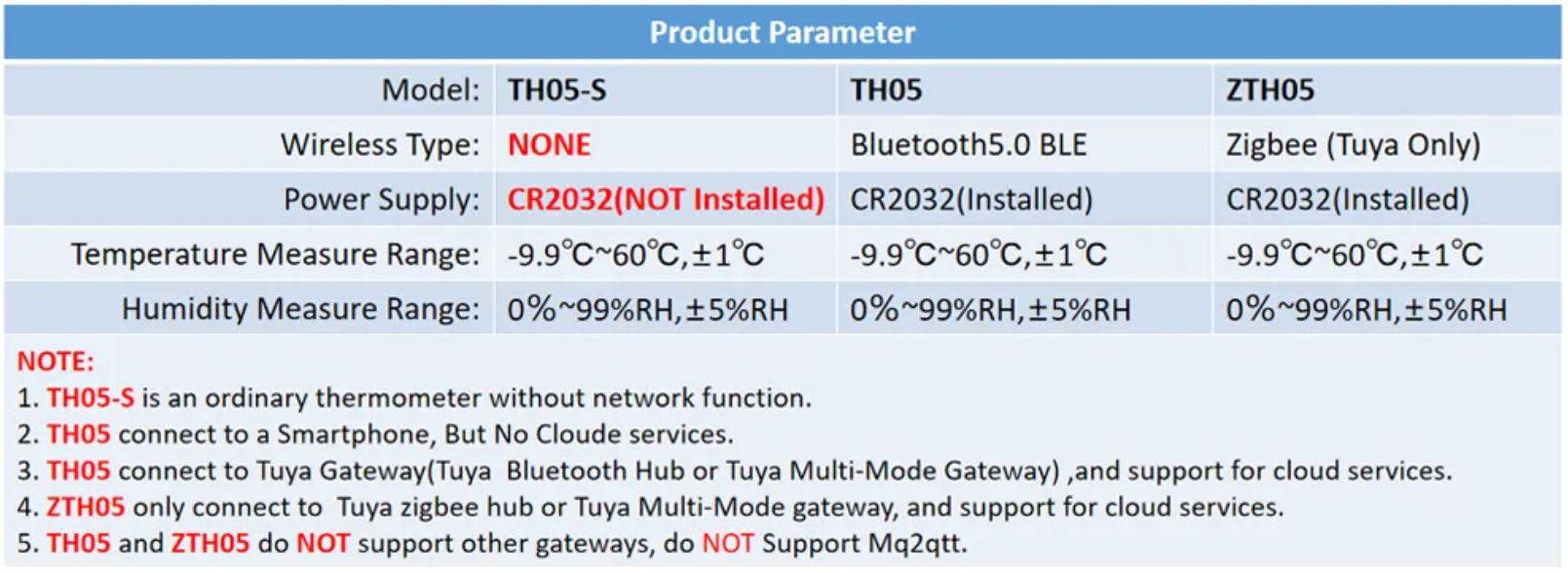
The version I ordered and tested is the last column.
I note that in the received model, the stack is well included.
I note that it is specified: Zigbee (Tuya Only), I hope Zigbee2MQTT works with, I will check this immediately. Read More
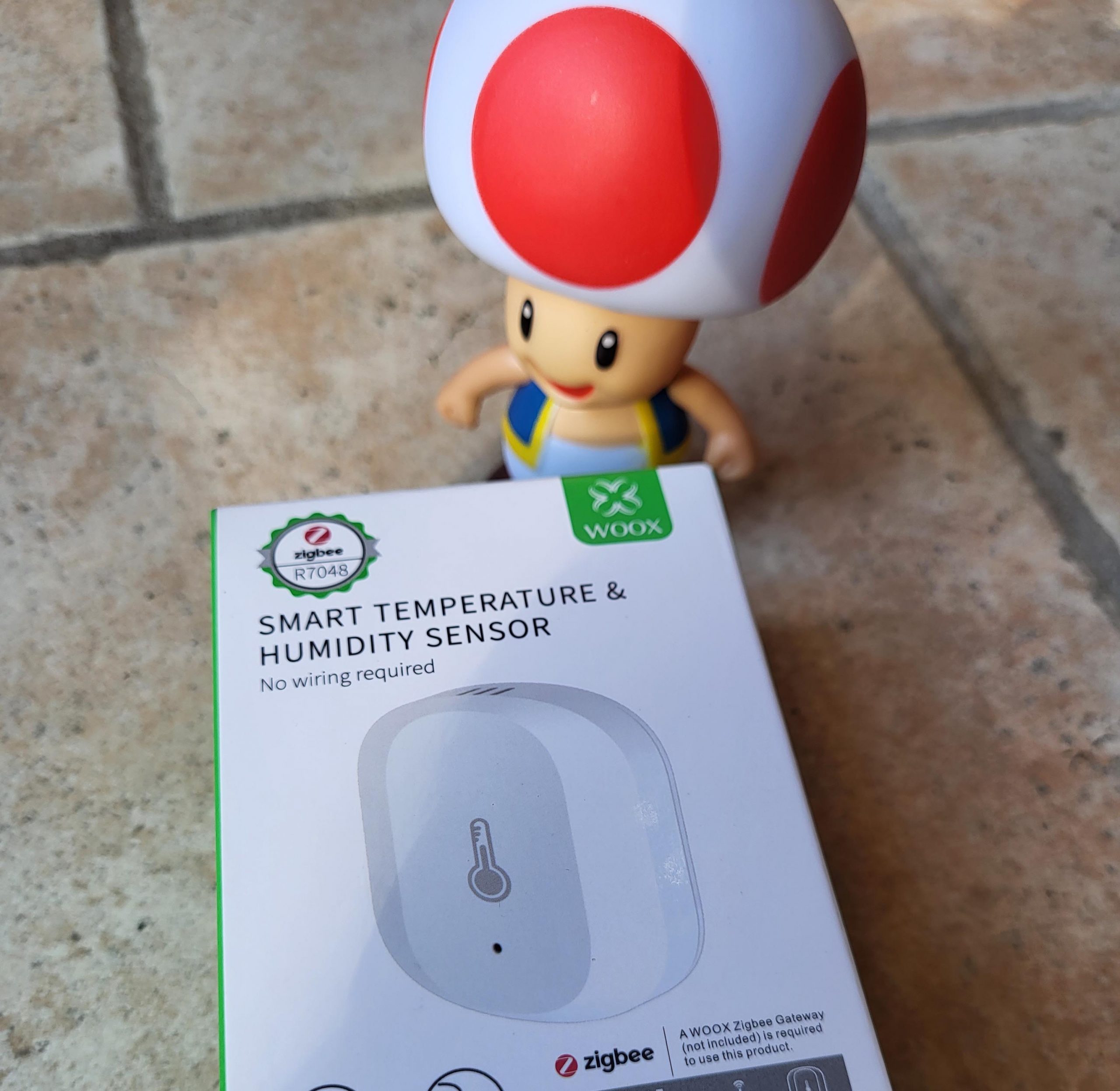
For more than 10 years, I had been using Oregon Scientific thermometers, equipment of remarkable reliability: no failure, batteries that last for years, and a 433 MHz transmission via an RFXCom. However, I decided to gradually migrate my entire system to Zigbee to simplify and modernise my home automation installation. Read More
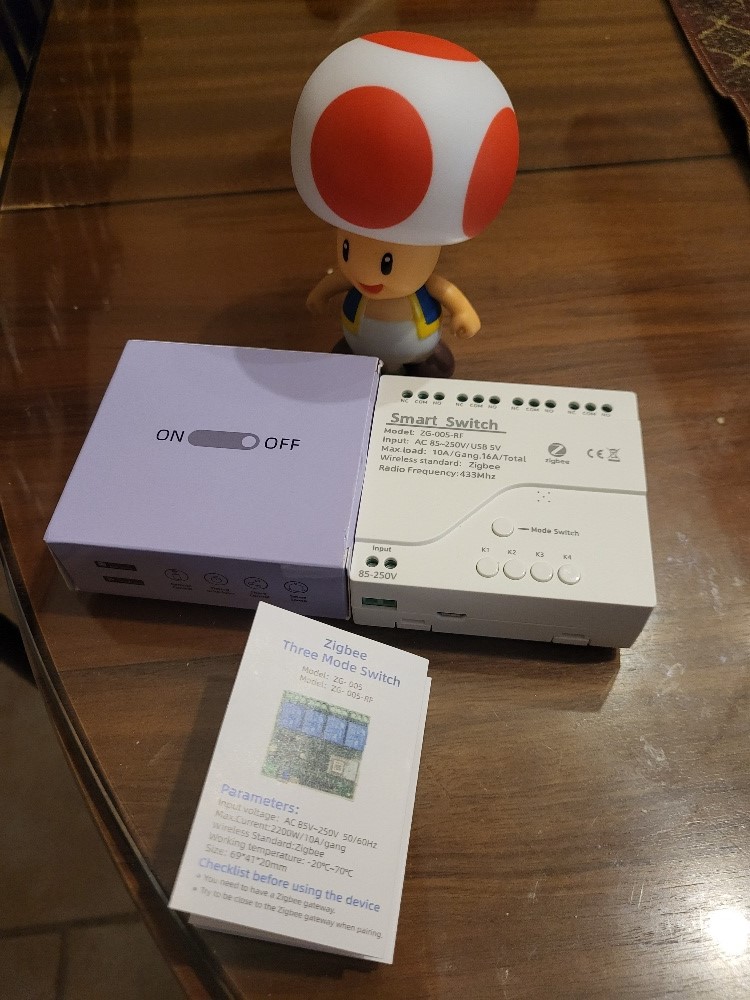
Zigbee 4-channel dry contacts are an advantageous replacement for Sonoff modules. This ZG-005-RF case offers 4 NO/NC outputs that can be controlled via Zigbee2MQTT and Home Assistant. Discover my complete test to order lights, valves or gates in home automation.
The dry contacts (potential free) are essential in home automation. They make it possible to control any electrical appliance without supplying any voltage themselves. The current only passes when the contact closes, making this type of module universal and secure.
I tested this Zigbee module purchased with my own funds. No sponsorship, just realistic tests.
This housing supports a voltage of up to 240V maximum. Maximum load: 10A per channel (2200W to 220V resistive), limited to 220W with LED. Total 16A for all 4 channels combined.
 English
  French
  Spanish
  Chinese
  German