


📘🔐 Special file: Nuki Smart Lock Ultra
This article is part of my complete file from installation to accessories to home automation.
- I replace my Danalock V3 with a Nuki Smart Lock Ultra ← you are here 🎯
- I connect the Nuki Smart Lock Ultra to my home automation
- I add a Nuki Keypad 2 NFC to my Smart Lock Ultra
- I add a Door Sensor to my Nuki Smart Lock Ultra
📌 Why this change of home automation lock?

For several years I have been using a Danalock V3 Zigbee on my front door. It had itself replaced an old Danalock in Z-Wave, when I switched my home automation installation from Z-Wave to Zigbee.
She is still doing the job very well, but I wanted to move to a more modern solution and above all better suited to my current installation, especially with Matter in mind. I also wanted to forget the physical keys without multiplying the modules for it. And, quite honestly, I also wanted to get rid of 😇 battery management.
With the Nuki Smart Lock Ultra, What immediately interested me was the promise of a more mature package: Built-in Wi‑Fi, Matter over Thread compatibility, rechargeable battery, universal cylinder supplied and guided installation.
Looking through the official documentation, I also understood that Nuki had not simply sought to make a lock look prettier or smaller. The Ultra introduces a brushless motor, presented as more efficient and sustainable, with a technological approach that the brand brings closer to what is already known in other sectors such as electric vehicles.
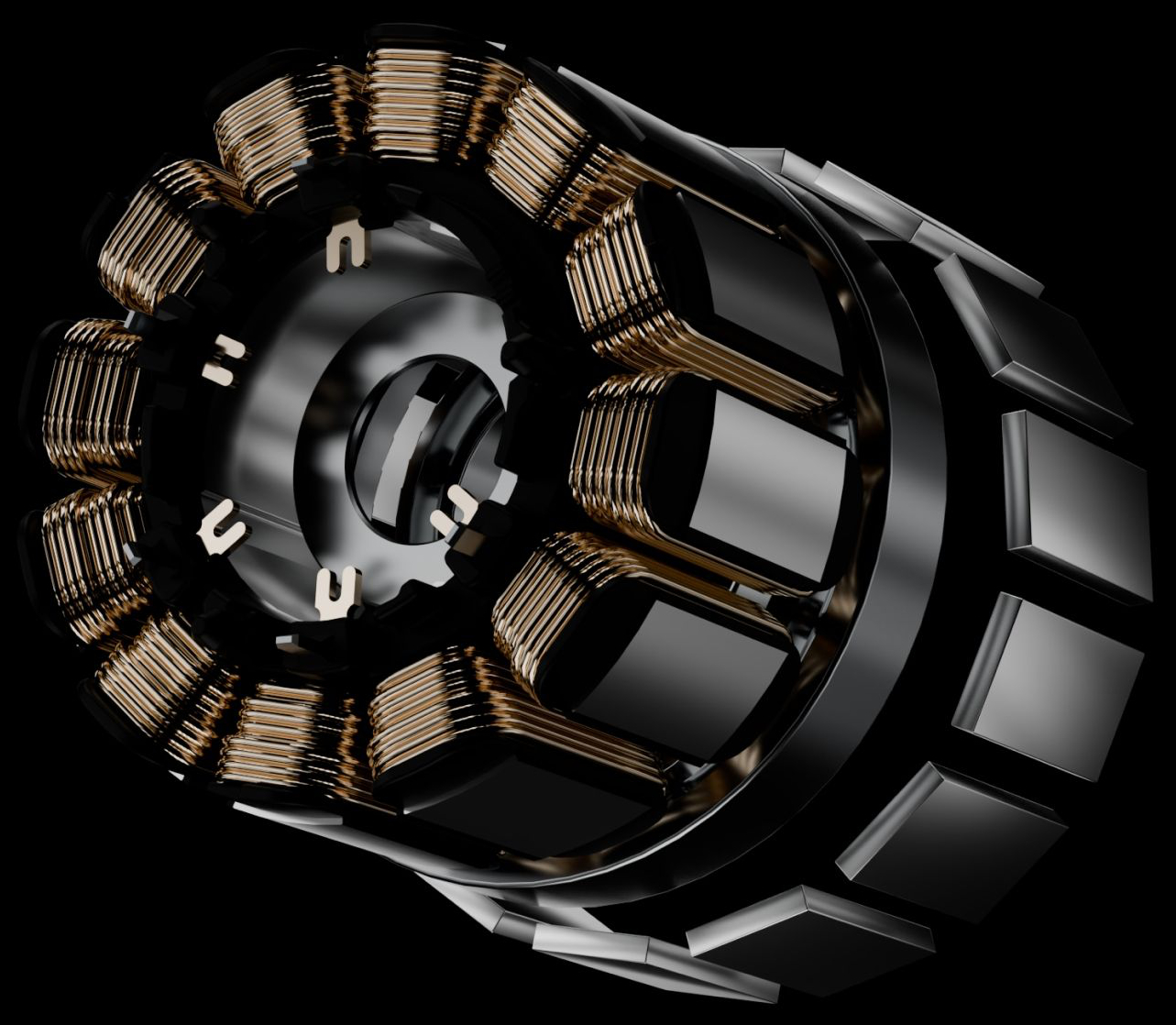
In this article, I tell how I went from my Danalock V3, installed in 2023, to the Nuki Smart Lock Ultra, from the removal of the old connected lock to the first tests in the application. I will document in other articles the different modes of home automation connection as well as the interface in Home Assistant.
To tell you the truth, I discovered the Nuki Lock thanks to an opportunity to loan the equipment, I did not know the Smart Lock Ultra, I only knew the Smart Lock Go, the one with a white case under the lock. It was never compatible with my front door, because of the relief/reinforcement on the leaf between the lock and the edge of the door.
🏭 Who designs and manufactures Danalock and Nuki Smart Lock Ultra?

Both locks are European, but with very different histories, structures and economic models.

The Danalock V3 which I have used for several years is originally the product of a Danish start-up Founded around 2010, specializing in connected locks for the home.

Danalock ApS designed and developed the first generations of Danalock locks, first in Z-Wave, then in Zigbee and Bluetooth, with real sensitivity for integration into existing home automation ecosystems such as Home Assistant, Jeedom or Zigbee2MQTT.
In 2017, the Spanish Group SALTO Systems, a major player in electronic access control, invested in Danalock by taking a significant share of the capital, without immediate absorption. Over time, Danalock gradually joined the SALTO group: the company that wore the Danalock brand has been renamed Salto Home Solution and is now part of SALTO WECOSYSTEM.
In concrete terms, therefore, Danalock is no longer an independent brand. It is now a product brand within the SALTO Group, positioned on the residential connected lock.

Today, Danalock is therefore Designed by Salto Home Solution, an entity of the SALTO group, and marketed under the name Salto Danalock or Salto DANALOCK V3. The country of historical design remains the Denmark, although development and production are now part of an international group approach, with manufacturing remaining, as is often the case in consumer electronics, largely globalised.
Side Nuki Smart Lock Ultra, the story is different. The product is designed and developed by Nuki Home Solutions GmbH, an Austrian company based in Graz, founded in 2014.
Nuki is an independent brand, specialising in connected locks for the home, and has not been absorbed by a large access control group as is the case for Danalock.

The Smart Lock Ultra is therefore Designed in Austria by the Nuki team, with a strong focus on user experience, ease of installation and modern home automation integration: Matter, Thread, Wi‑Fi, Home Assistant, Apple Home, Google Home, Amazon Alexa, etc.
Nuki also states that the Smart Lock Ultra, like the other goods of the mark, is developed in Austria and manufactured in Europe.
🔐 I am interested in digital sovereignty and GDPR
Beyond the geographical origin of the two marks, I also asked myself the question of the digital sovereignty and the protection of my data. In home automation, and even more so with a connected lock that controls access to my home, this is an important point for me.
Side Nuki, the transparency is quite clear: the lock is designed in Austria, manufactured in Europe, with servers located in the European Union and GDPR compliance highlighted as a real argument.
Nuki also communicates a lot on this subject, and the mark also recalls that the lock has been recognised as a secure home automation product by the Institute. AV-TEST.
Side Danalock, I found less consumer communication, but still reassuring elements on the side of the SALTO Systems group. SALTO communicates on its GDPR compliance, the presence of a DPO, the security of the processing operations and the existence of a data processing agreement. The hosting partners mentioned are located in the EEA, in particular in Ireland and the Netherlands.
In both cases, it is therefore a question of European trade marks They are placed in a serious regulatory framework. The difference is mainly in the way it is told: Nuki puts it forward for individuals, SALTO documents it in a more institutional logic.
At this point, I'm not sure at 100 % that one or the other is fully protected from the logics of extraterritoriality. This topic goes beyond the mere words “hosted in Europe” or “GDPR compliant”.
Despite this, both approaches still reassure me. For me, it is not only a matter of ‘made in’, it is also a matter of trust in the way data is processed, stored and governed.
I would have liked to see a real option 100 % local, even at the cost of a few less “practical” functions: a mode in which the manufacturer ensures that no data leaves my home, so that everything passes only through my local home automation, whose accesses and flows I control. Neither mark actually offers this today. However, I believe that this issue will become central in the years to come.
📊 Comparative size: Danalock V3 vs Nuki Smart Lock Ultra
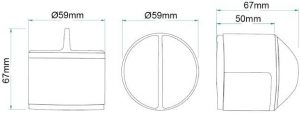
To visualize the differences between the two products, here is a small comparison of the main dimensions and weight. This makes it possible to quickly understand what changes, concretely, on the door.
| Product | Diameter | Length | Weight |
|---|---|---|---|
| Danalock V3 | ≈ 59 mm | ≈ 50/67 mm | ≈ 195 g |
| Nuki Smart Lock Ultra | ≈ 57 mm | ≈ 58 mm | ≈ 250 g |
 |
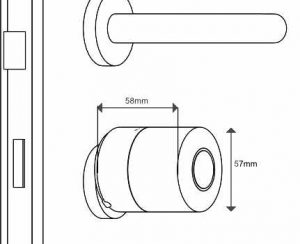 |
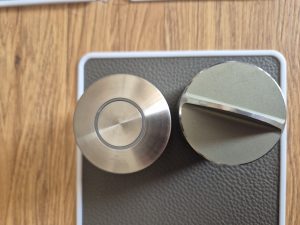
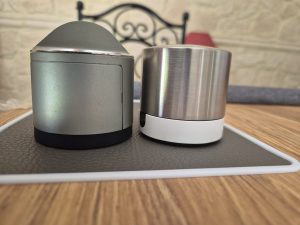
Both products remain compact and are in the same order of magnitude. The Nuki Smart Lock Ultra is slightly shorter, slightly denser, and overall more visually picked up.
Nuki also highlights the fact that this generation is three times faster than previous generations of the brand. I do not have an old Nuki here to physically compare, but it gives a good idea of the generational leap that the mark claims.
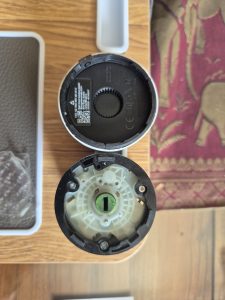
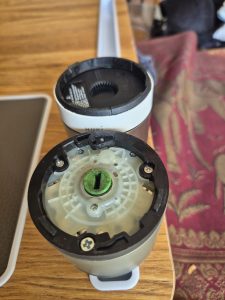
Some comparison photos of the two products:
 |
 |
 |
 |
📏 I check the compatibility of my door
The Nuki documentation provides for a phase of measurement and adjustment of the cylinder. I therefore started by observing the existing configuration of my door and by identifying the dimensions of the old cylinder before dismantling.
This step is important, because the universal cylinder supplied with the Nuki Smart Lock Ultra shall be adapted to the thickness of the door. It is not complicated, but you have to take the time to do it cleanly.
The official documentation insists that this cylinder was designed to cover the vast majority of door widths, with a modular adaptation logic. This is precisely what allows Nuki to impose a supplied cylinder here, without restricting compatibility too much.
Switching from Danalock to Nuki is not an explicit case in Nuki’s installation wizard, which seems mostly designed to replace a classic cylinder with a Nuki lock. Despite this, I managed without any particular difficulty, simply following the logic of measurement and adjustment.
🔧 I dismantle the Danalock and the old cylinder
 |
 |
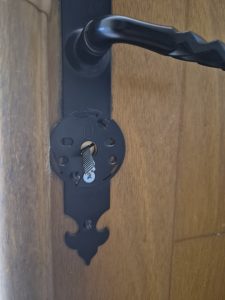 |
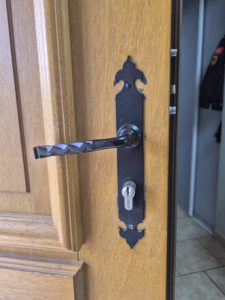
The first real step in the construction is to remove the Danalock. In my case, this amounted to disassembling the module on the inner side and then releasing the old cylinder to prepare the transition to the Nuki system.
I took my time for this phase, because it is often there that we really understand how the previous installation was designed. It also allows you to leave on a clean basis before mounting the new equipment.
🪛 I first remove the Danalock module
I started by filing the Danalock itself. Press the small hole on top to unlock it while turning, then remove the module.
Once the module is removed, the door returns to a more classic configuration, allowing it to return to the cylinder and its attachment.
If you do the same thing, I advise you to keep all the parts of the old assembly in a box. Even if the aim is not to go back, it is still useful for documenting migration or keeping a fall-back solution.
🚪 I then remove the old cylinder
Once the Danalock had been deposited, I removed the cylinder support screw from the door edge and then extracted the old cylinder. This step is not particularly complicated, but it requires a bit of precision to properly align the cam at the time of exit.
At this point, the door is ready to receive the Nuki Universal Cylinder. It is also a good time to check that everything is mechanically healthy, with no hard points or abnormal play.
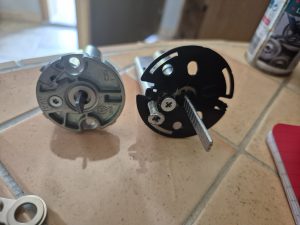
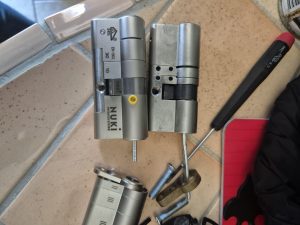
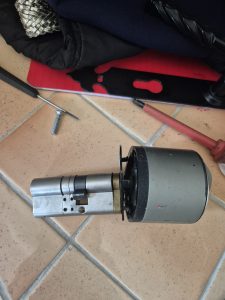
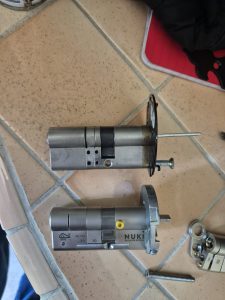
🔧 I use this opportunity to compare the two cylinders
The wizard provided by Nuki makes it possible to select the elements necessary for the constitution of the cylinder according to the width of the door.
 |
 |
 |
 |
 |
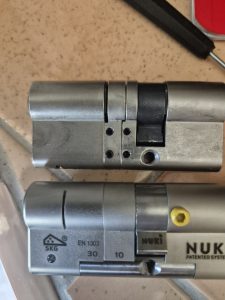 |
I find it interesting that Nuki also reinforced Nuki’s argument. physical security around this cylinder.
In its documentation, it is presented as a premium cylinder, with emergency function, which allows to continue using physical keys even after the lock is mounted.
🧩 I install the Nuki Universal Cylinder
This is probably the most specific part of this migration. With the Smart Lock Ultra, Nuki does not just add a connected engine: the installation is based on a dedicated cylinder, which must be adjusted and mounted correctly.
The Nuki app accompanies this phase, which is a very good idea. It describes step by step the installation of the cylinder. Mechanical assembly is not left alone, and this makes the whole thing much more reassuring.
The brand announces an installation in less than 15 minutes, without drill or special technical skills. I always remain cautious in the face of this type of promise, but in my mind, I find this desire to accompany the user to the end.
📐 I adjust the cylinder to my door
 |
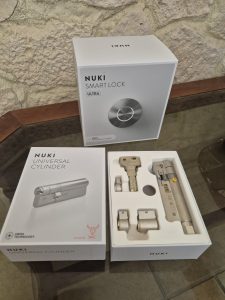 |
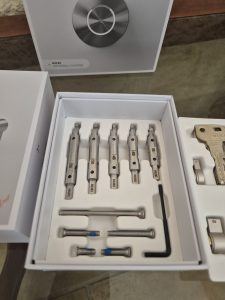
I started by preparing the universal cylinder according to the configuration of my door. Nuki's logic is clear: the correct length is first adjusted and then the cylinder is installed in the lock.
This step requires some attention, but it remains very accessible. The most important thing is not to want to go too fast, because a good fit simplifies all the rest of the assembly.
🔑 I first test the mechanical operation
Once the cylinder was in place, I immediately checked the operation with the key. For me, this check is essential before adding the connected part, because it makes it possible to validate that the mechanical basis is correct.
If the key rotates freely and the door locks normally, one can pass serenely in the suite. If this is not the case, it is better to correct it right away rather than pile up the problems.
I also found it reassuring to see that Nuki maintains this logic of emergency function : even with the Smart Lock Ultra installed, and if by extraordinary, an electronic failure blocked its operation, the lock can be used from the outside with the keys and from the inside by turning the wheel.

⚙ I fix the Nuki Smart Lock Ultra
Once the cylinder was installed and mechanically validated, I was able to set up the Smart Lock Ultra herself. This is where you really find the compact and neat side of the product.
The arrangement is more consistent than I initially imagined. The lock fits neatly on the door, without giving the impression of an accessory added afterwards.
🧲 I position the module correctly
I took the time to align the Smart Lock Ultra with the cylinder. On this type of equipment, good positioning is essential to avoid unnecessary constraints on the mechanism.
Once in place, the package inspires confidence. The format is compact, and the installation looks more modern than what I had experienced with my Danalock.
Nuki’s iconic luminous ring is still present, and the mark now provides two interchangeable rings, black and white, to better fit the aesthetics of the door. I had not noticed this detail at the outset: I even wondered what the black ring I had in my hands was for. In fact, white was already pre-assembled on the lock, and I find it more elegant, more modern, especially because it stands out better on my door than black, which blends more with the black handle plate. But tastes and colors …
🔋 I make the first power on
The Smart Lock Ultra works with a Built-in rechargeable battery, This is a very concrete change from more conventional battery-powered models. For me, it is a real comfort: finally the end of the regular replacement of batteries as with the Danalock.
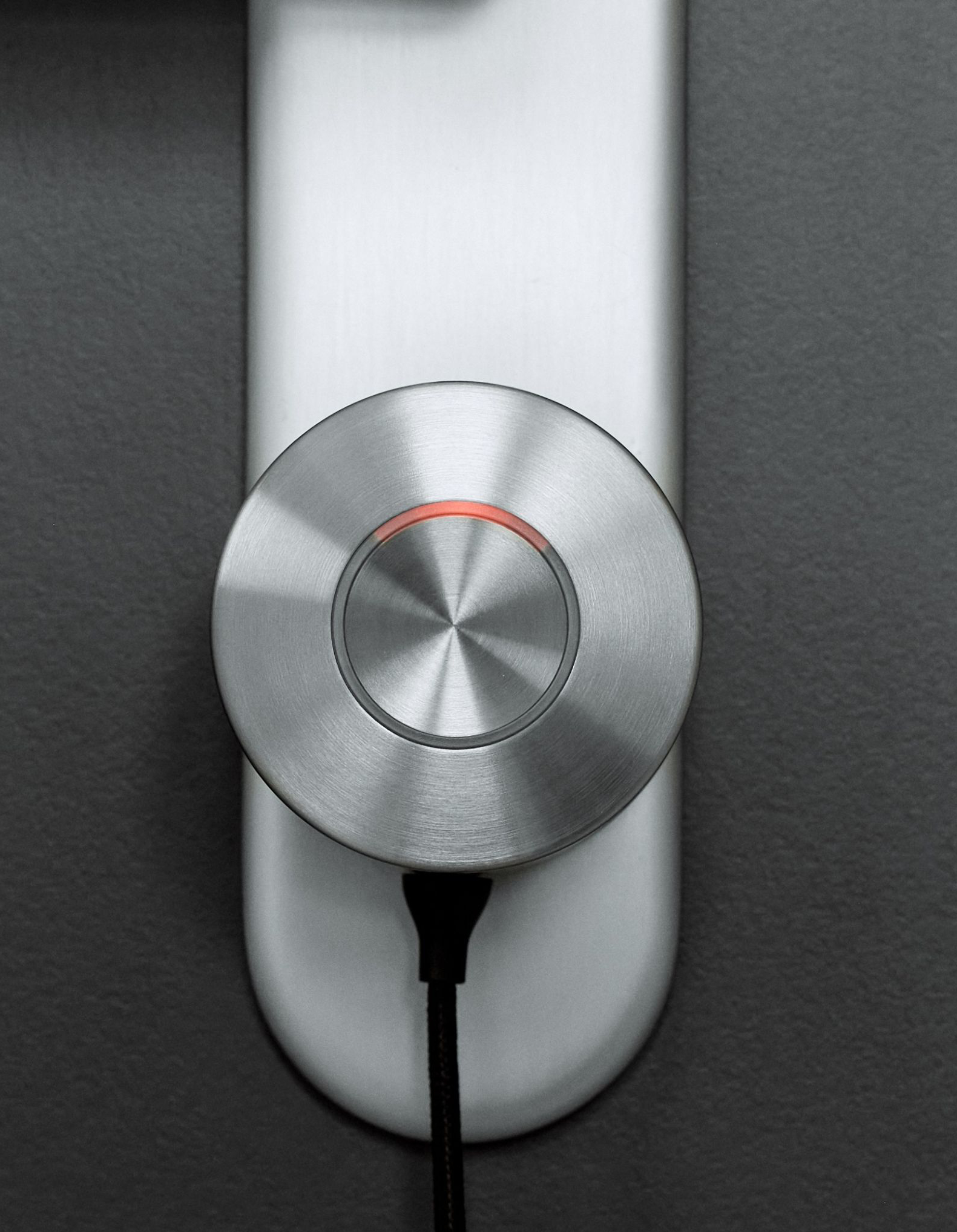
So I loaded the lock before it was installed. Nuki provides a relatively long charging cable, making it easy to connect to a conventional 5V power supply, just like a smartphone.
 |
 |
The documentation announces a full charging in about 2 hours, with autonomy of several months. The charging system is magnetic, which seems to me quite logical on an object permanently installed on a door.
In everyday use, this is not a detail. It is easier to maintain, although it will of course be necessary to observe what this means over time.
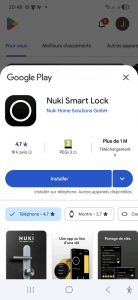
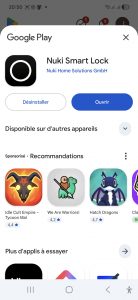
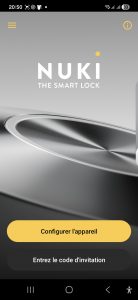
📱 I configure the lock in the Nuki app
 |
 |
 |
 |
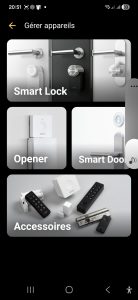 |
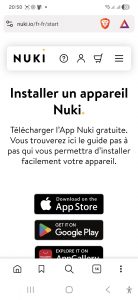
As often with this type of product, the software part is almost as important as the physical assembly. The good surprise here is that the app really guides the installation.
So I let myself be carried away by the assistant to add the lock, start the calibration and finalise the first adjustments.
When I arrived at the end of the installation, I said to myself: “Well, that’s it, that’s it.” And that is a pretty good sign. The whole thing is simple, fluid, and well thought out.
📡 I add the Smart Lock Ultra
The Nuki app detects the lock and accompanies the pairing. This phase makes it possible to properly associate the hardware and start the configuration without complicated procedures.
In this first step, the link is established by Bluetooth transparently.
I found this part particularly fluid. It feels like Nuki really worked the installation experience.
🎯 I launch calibration
After adding the lock, the application requires calibration. This step is important because it allows the Smart Lock Ultra learn precisely the locking and unlocking positions of the door.
Concretely, the lock performs several movements to understand the necessary stroke. We just have to let her do it calmly, without intervening.
Compared to my memories of calibration of the Danalock (which I had to do at least once every 6 months), here it is almost childish: Everything is automatic.
🌐 I then activate Wi‑Fi
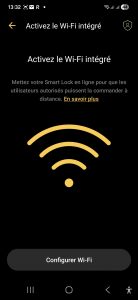
Once operational, I activated the Wi‑Fi connection to make the lock more widely accessible in my home automation environment. This is a real change from older architectures where a separate bridge had to be added.
In my case, this was clearly part of the arguments in favour of this migration. I like installations that are simpler to maintain, with fewer intermediate housings.
The documentation is very clear on this point: the Smart Lock Ultra is compatible with almost all Nuki accessories, such as the Fob, on Keypad, on Keypad 2, on Keypad 2 NFC or the Door Sensor, without the Nuki Bridge This is necessary precisely because Wi‑Fi is already integrated.
⚡ I also notice the speed modes
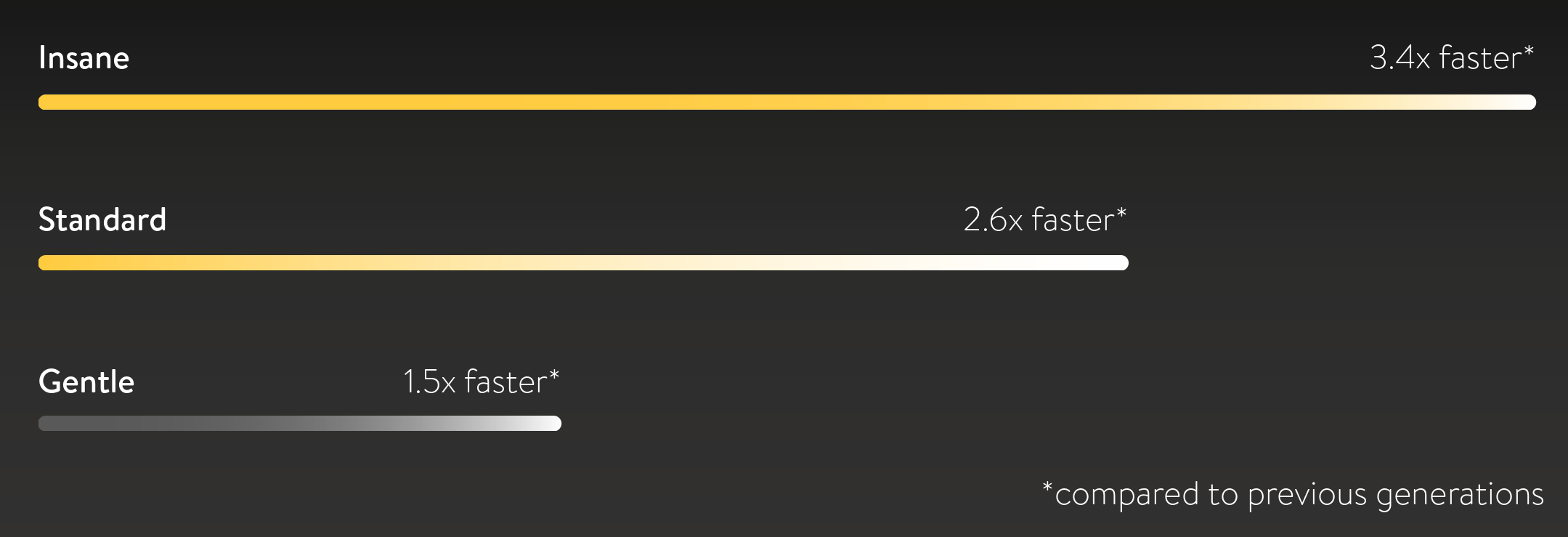
This is something I did not necessarily have in mind before reading the Nuki documents: the Smart Lock Ultra proposes three speed modes.
You can choose a mode Insane to go very fast, a mode Standard for a balanced compromise, and a Gentle to reduce noise.
On paper, Nuki announces an opening or closing in less than 1.5 seconds in Insane mode, around 2 seconds in Standard, and a softer behavior in Gentle.
I find this interesting, because it shows that the lock is not just looking to be connected. It also seeks to adapt to real uses, between speed, sound level and everyday comfort.
I chose to keep the mode the least fast, so the least noisy to respect the sleep of the teens in the house in case of manipulation of the lock. The opening or closing speed, even in Gentle mode, is correct.
It corresponds to the opening or closing speed of the Danalock, with the same noise as well.
The true true difference it is the time between the control and the movement, there, we gain several seconds, the Nuki is immediate while the Danalock requires a few seconds before reacting.
🔄 I also note the simplified migration from another Nuki
This was not of direct concern to me since I came from a Danalock, but I find it useful to point it out: Nuki has planned a Data migration from an old Nuki lock.
According to the brand, the app can transfer settings, enabled functions, access permissions and certain connections. For someone already in the Nuki ecosystem, this is clearly a positive point.
🛑 I stop at this point
I stop here for this article, before publishing pages dedicated to home automation.
And here are my first conclusions, hot, right after the pose.
✅ My first return after replacement
With this passage from Danalock to Nuki Smart Lock Ultra, I did not simply change my trade mark. I also changed my installation philosophy from an older system to a more integrated solution.
Danalock is not “old” in the obsolete sense. It dates from 2023 in my installation, and there is even a more recent declination. But the Nuki Ultra still feels like a product from a different generation.
What I take into account above all is that migration requires a little more involvement at the outset, because of the replacement of the cylinder, but that in return a more modern, more homogeneous and more coherent whole is obtained.
👍 What I already enjoy
At this point, I particularly appreciate the compact format, the application-guided installation, the presence of native Wi‑Fi and the logic of the universal cylinder. The whole gives the impression of a really well-thought-out product.
I also find it interesting to have a solution that is more in line with current connected home standards, in particular with Matter over Thread.
Above all, I would point to the general consistency of the product: brushless motor, rechargeable battery, speed modes, cylinder supplied, magnetic charge. All this gives the impression of a product conceived as a whole, and not as an assembly of dispersed elements.
🔗 And the Danalock?
Compared to my Danalock, I immediately feel that I am on a more up-to-date platform. Between the built-in Wi‑Fi, the rechargeable battery and the more modern integration possibilities, the general logic seems to me to be more complete.
It is not just a matter of design or novelty. Above all, it is an impression of simplification, coherence and maturity overall.
This does not discredit the Danalock. In my opinion, it retains a real place in the home lock ecosystem, especially if you are looking for Zigbee or Z-Wave, which Nuki does not offer in this form.
I had read several feedbacks and seen some videos before I started. I notice that the support screens and the Nuki app change from month to month. The catches I have seen elsewhere confirm to me that the product is alive, monitored and improved over time, which is rather reassuring.
The user interface of the Nuki application corresponds well to what is expected today. Where Danalock, from memory, has never really found its cruising speed: between the initial installation and today, I used at least three different Danalock applications, all functional, but often a little destabilising, either on the design side, or on the ergonomic side, or on the logical side.
⚠ What to keep in mind
On the other hand, it must be borne in mind that the installation is not that of a simple lock to be installed on the existing one. With the Ultra, we really intervene on the cylinder, and we have to accept this dimension a little more ‘bricolage’.
In my view, this is not a flaw, but rather a point of vigilance. If you want a clean installation, you simply have to take your time and follow the steps.
I even find it interesting that Nuki now clearly assumes this choice. The mark explains that approximately 30 % of its customers were already replacing their cylinder when installing a lock, while working on a future solution for other users who do not want to go through this step. This confirms how I feel: with Ultra, we are on a more assertive product in its technical choices.
🛒 Where to buy the Nuki Smart Lock Ultra?
As I do for all the products I test, I have integrated the Nuki lock and the two accessories I will test in other articles on dedicated product pages in the Labo-Sigalou.
On this Lab, I give the key points of the products as well as the pages related to it. I also compare the prices of the products.
🛍 On the question of price?
I have not given a precise price in this article, and this is voluntary. It is not a simple story of “this one is cheaper, this one is more expensive”.
The comparison is more subtle, because it depends entirely on my departure facility, what I already have, and what I am really looking for.
With the Danalock V3, I buy a module that attaches to my existing cylinder or I choose to change it. It is considered simple, fast, but it also requires a good look at the ancillary elements:
- the cylinder is not necessarily included even if I had chosen to change it;
- on a European profile, it is necessary to check that you have the correct version or an adapter;
- for remote access, a Danabridge must be added;
- and you have to manage the batteries over time.
With the Nuki Smart Lock Ultra, the logic is different. I buy a complete pack, with the lock and the universal cylinder. I do not have any essential accessories to add for the basic operation. Wi‑Fi is built-in, the battery is rechargeable, and the whole thing has been designed as a whole.
That is also why I find the price-to-price comparison a bit misleading. Nuki also offers several approaches, in my case, with the Ultra, you don’t just buy a lock engine. We buy a coherent whole: cylinder, magnetic charge, remote connectivity, speed modes, compatibility accessories.
But the real question, for me, is above all: Do I want to change cylinders or not?
- If you want keep its existing cylinder, the Nuki Smart Lock Pro 5ᵉ Generation seems to me to be a very coherent solution, with Wi‑Fi and Matter, without replacing the cylinder.
- If we agree to change cylinder, as I have done here, or if the existing cylinder is old, unsatisfactory or unsuitable, then the Smart Lock Ultra It immediately becomes much more logical.
The Smart Lock Ultra is, in a way, the model that integrates everything in series. But that does not mean that it is automatically the best for everyone. It is simply the most complete.
Prices are available product by product in my Lab, but I especially advise to reasoning in a use-case scenario :
- if you want to change cylinders → Ultra;
- if you want to keep your cylinder → Pro 5ᵉ generation;
- if we want to stay on a lower budget → Go, with a simpler logic and some compromises.
I give the differences and prices in my Lab, but the real choice, in my opinion, is first architectural before being budgetary.

📚 The other pages dedicated to the Nuki lock
As this article is deliberately centered on the physical replacement of the Danalock by the Nuki Smart Lock Ultra, I will detail the rest in several dedicated pages.
This will allow me to separate more clearly the installation part, the home automation part and the return to use over time.
- xxx : coming soon.
- xxx : coming soon.
The idea is to have, throughout the publications, a more complete view of the Nuki Smart Lock Ultra, from installation to actual integration into a home automation ecosystem.
 English
 French
 Spanish
 Chinese
 German