


I am particularly curious, I come across a ZIGBEE thermometer + humidity sensor for less than €5 with a screen that focuses on the essentials.
I saw him pass by, is he up to the task? To put in all the rooms, at this price, it is a great opportunity.
🔍 I check the received model
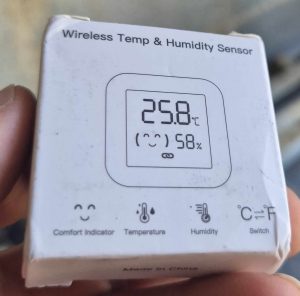
- On the technical sheet : exact model TH03
- On the carton : Wireless Temp & Humidity Sensor
- Type of equipment : temperature and humidity sensor with display
- Protocol : Zigbee
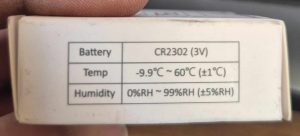
- Power supply : 3V button battery (not included)
- Intended installation : placed on a piece of furniture or fixed to the wall, no double-sided scotch.
- Measuring ranges : ambient temperature and humidity
- Dimensions / IP : compact format for indoor use
 |
 |
🛒 Where to buy this equipment?
Here is the link to the page dedicated to Zigbee TH03. I will refer to the sellers and prices as I find them.
Always beware of imitations on Aliexpress.
📦 Unpacking and First Impressions
At the reception, I unpack: the TH03 sensor, its instructions and packaging.
Good surprise, the format is really compact and the screen is well readable, even on a table.
Correct plastic, low-end, we are not on the quality of the Sonoff SNZB-02D. But this is not surprising.
This model is minimalist, no battery, no double face to fix it, we manage!
🔧 Opening box and battery
This equipment is not supplied with a battery, on the box it is indicated CR2302. This is a model I never have.
The opening remains classic on this kind of small sensor, with a rear hatch that is easy to remove to access the battery.
I use CR2032 instead, it fits perfectly.
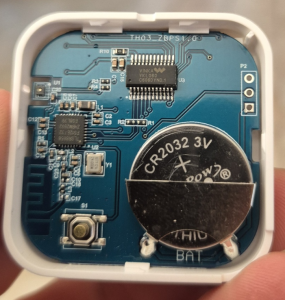
I always take a few seconds to check the state of the battery before pairing. This avoids many false problems at the time of Zigbee integration.
🕵 I compare this TH03 with the ZTH05
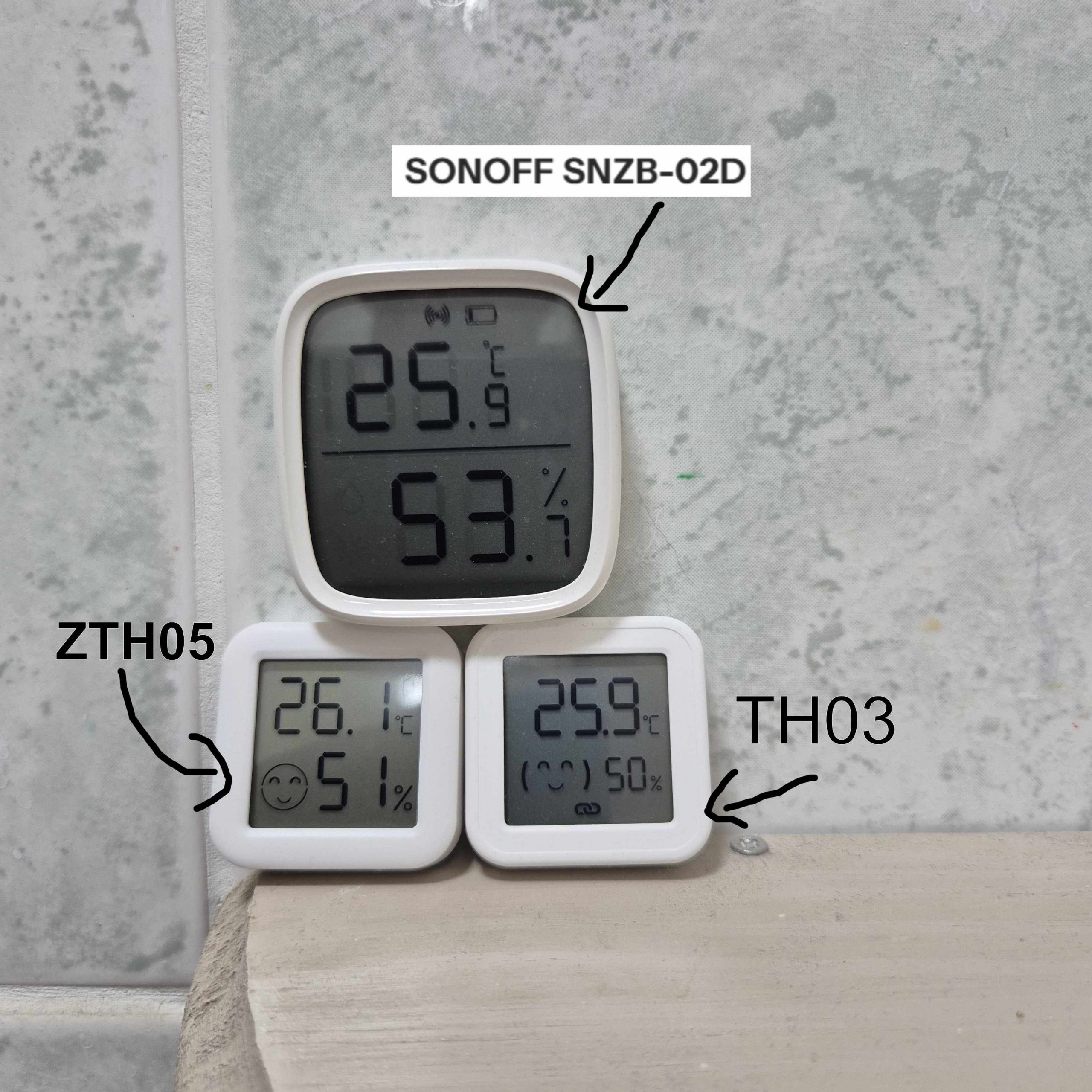
ZTH05 was the cheapest product until the arrival of TH03.
They look alike, but the ZTH05 comes with its stack and a small piece of double-sided. The TH03 is much cheaper.
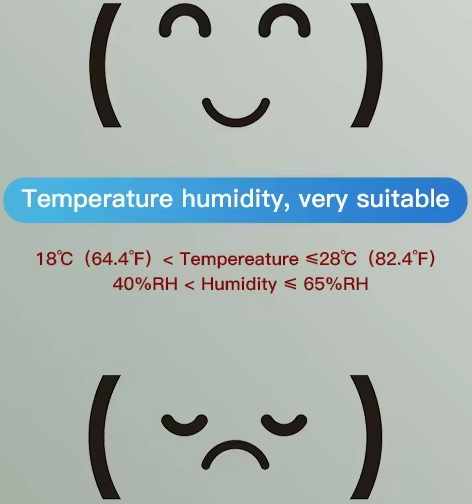
The TH03 has a Zigbee link indicator (at the very bottom). Both smile when everything is fine.
😊😞What does the face mean
I looked at the manufacturer for the meaning, here it is.
🔗 I pair in Zigbee2MQTT
- I pass Z2M in peering mode
- The sensor pairing starts as soon as I put the battery, at the very bottom, there is a link logo that flashes, when it is paired, it stops flashing. Perfect! Four seconds.
- Detected as TH01. It can be deduced that this TH03 is a TH01 with an additional display screen.
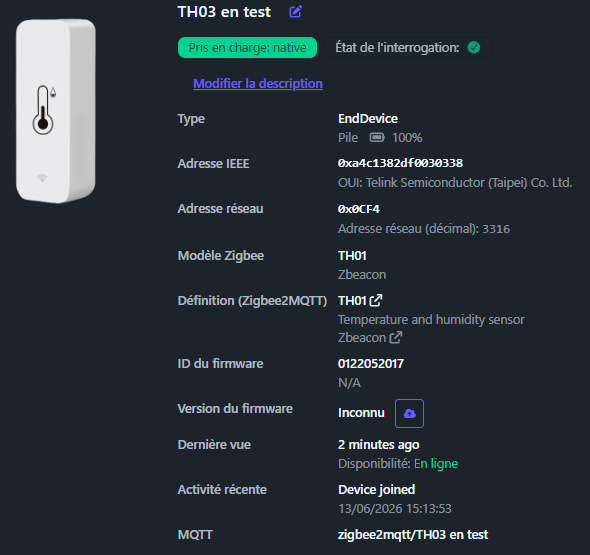
- Entities detected: battery, temperature, humidity, voltage
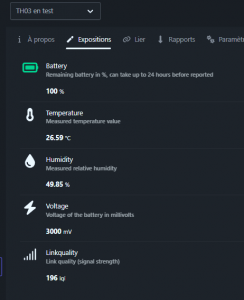
The exhibitions available are simple and clean, which suits me very well for basic and efficient home automation use. Just what it takes.
🏠 Integration in Home Assistant
I then find the device in Home Assistant with the usual entities retrieved by Zigbee2MQTT. I therefore have the temperature, humidity, battery level and battery voltage.
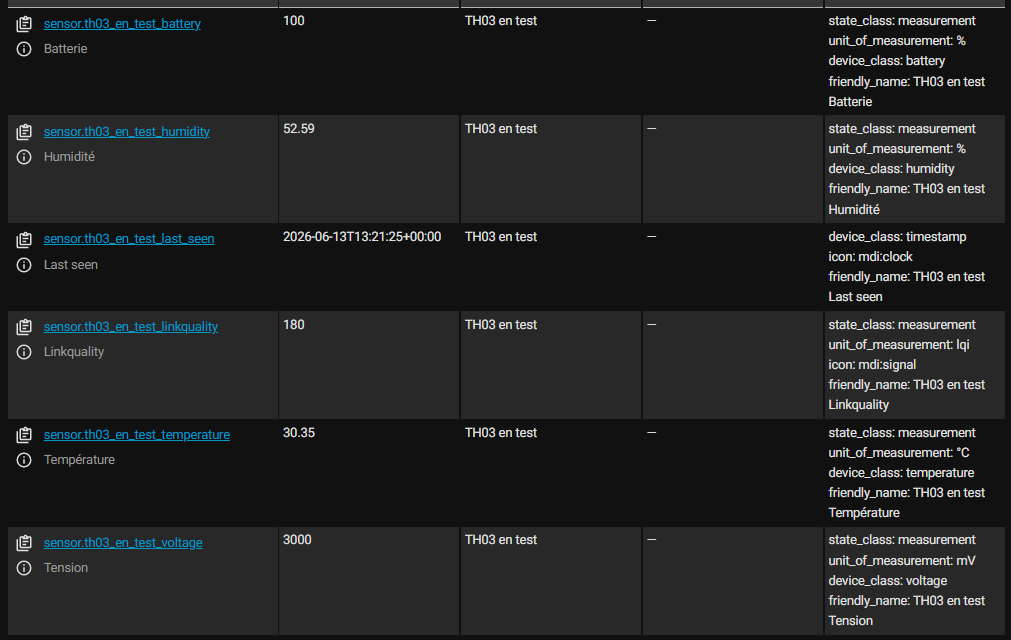
What I appreciate here is immediate integration. I do not need a complex trick to start historising the measurements or displaying them on my dashboard. Formats are good, nothing to do or configure.
📊 My first measurements
I always start by comparing this type of sensor with one or two other devices already in place.
This allows me to quickly see if the TH03 tells anything or if it stays within a credible range.
Well, honestly, it is good, almost nothing, I have several thermometers of several brands, they are not far away.
The manufacturer has provided for a possible correction thanks to offsets, well done! so if I am sure that it shifts by 0.2°C, I set an offset on this value.
Please note that the offset will be applied to the value displayed in Zigbee2MQTT and Home Assistant, but not on the thermometer screen.
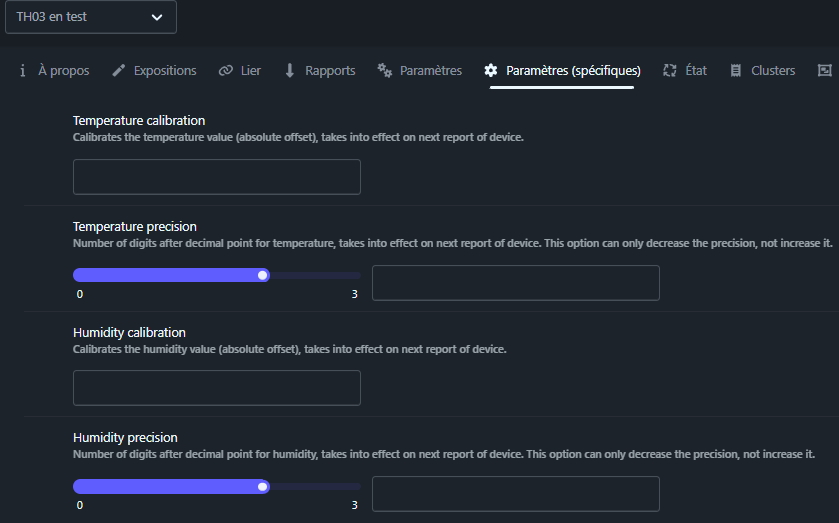
I even advise to decrease the accuracy to 0.1 so 1 digit after the comma, it saves battery, we do not need the temperature to 0.01, 0.4 is more than enough.
🪫I control the feedback pile
Many Zigbee sensors have problems retrieving battery information. I would like to know if the TH03 gives real information.
I see that the ZTH05 gives me the information on the screen:
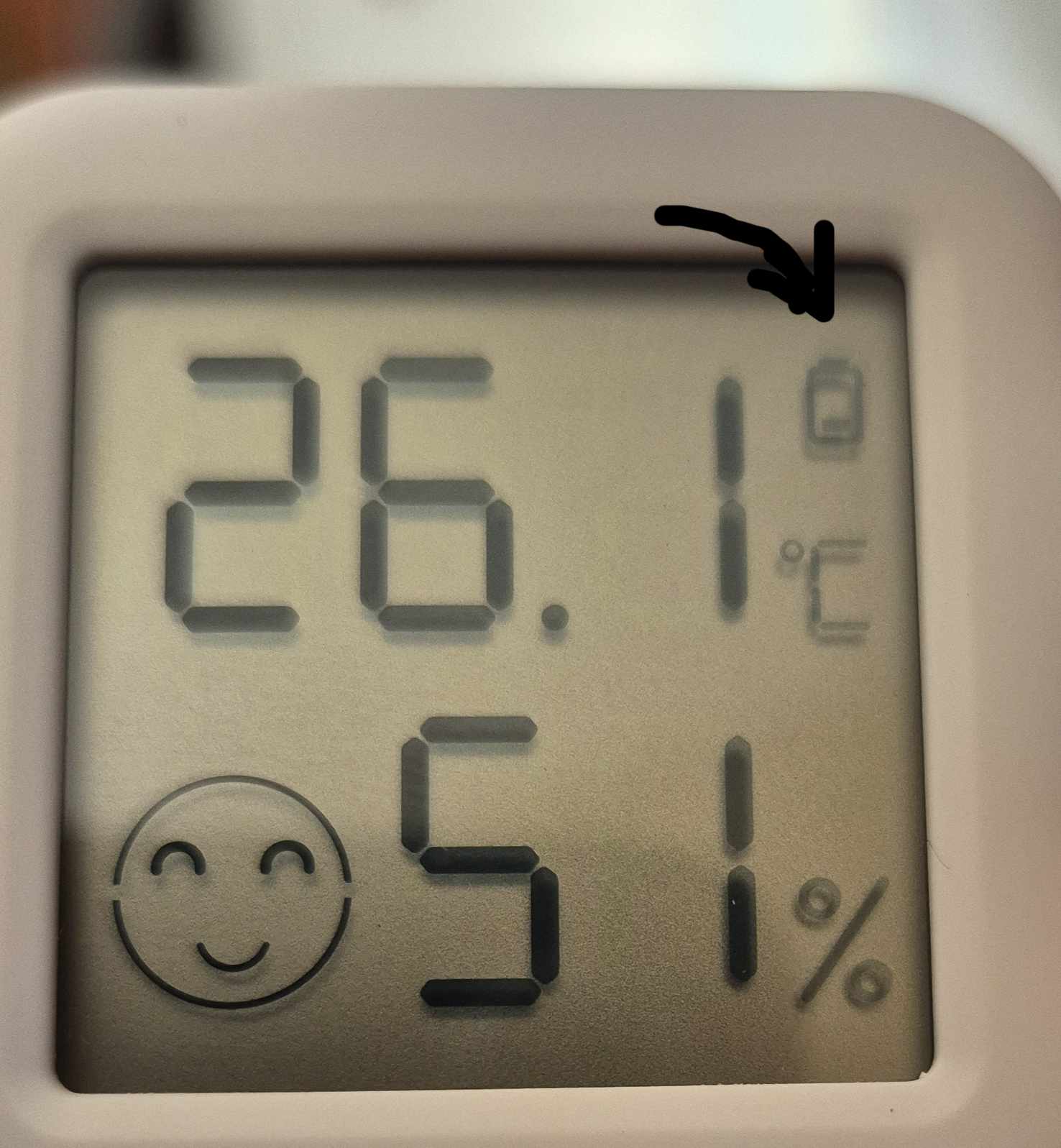
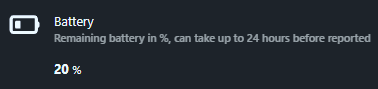

So I'm going to reverse the batteries of both … equipment.
ZTH05 detects battery change to 100% / 3100mV, it works perfectly
TH03 doesn't move, it stays at 100% / 3000 mV, we will wait 24h … sometimes, we have to wait for it to go back up.
Finally, 20 minutes later, the battery indicates: 65% / 2600mV, it has nothing to do with the value of the ZTH05 but already, it is moving, it is a good sign, an info goes up.
And the next morning …


So it is absolutely perfect! The battery measurement is the same as on the ZTH05, so one could consider that connected battery, this is fair. The percentage has to be a calculation, it's different, but it doesn't matter.
I note that the TH03 does not have a small almost empty battery logo lit at 27%, time will tell if this logo is missing or if it only reaches 25% or 20%…
But I am amazed for this type of product that the battery replacement works as well, on equipment of reputable brands, we still have problems of battery recovery regularly in Zigbee.
📅 Installation and monitoring of batteries
- Installed on 13/06/2026 (test piece)
As this model works on battery, I always keep an eye on the battery level and the voltage raised. This is often more useful than the simple percentage, especially on small economic sensors.
🔍 What communities say
Problems: I went through community forums, little feedback. This is a good sign, some accuracy messages may vary slightly depending on the location, the battery used and the frequency of data retrieval.
We must therefore avoid comparing it to a high-end weather station.
My tips: I allow the sensor to stabilise a few hours after installation, compare with another known probe, then apply a temperature or humidity calibration in Zigbee2MQTT if necessary.
💬 My opinion after commissioning
✅ Forts: very low price, readable screen, simple Zigbee2MQTT integration, temperature and humidity measurements, battery and voltage tracking, compact format.
❌ Weak: very basic finish, precision to be checked according to use, sensor especially designed for simple ambient monitoring, not for a reference measurement.
My verdict: for 5 €, I find this TH03 frankly interesting.
I would gladly use it to equip several rooms in the house on a low budget, especially if I want to multiply the measuring points without exploding the total cost of my installation.
 English
 French
 Spanish
 Chinese
 German